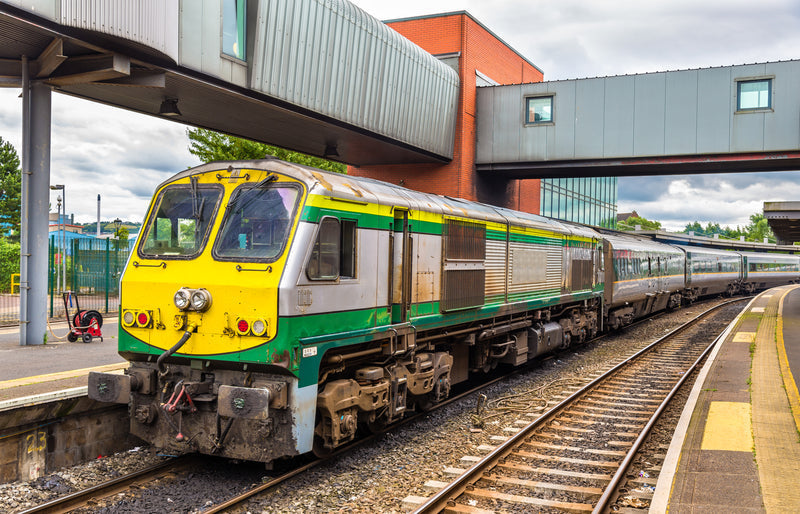
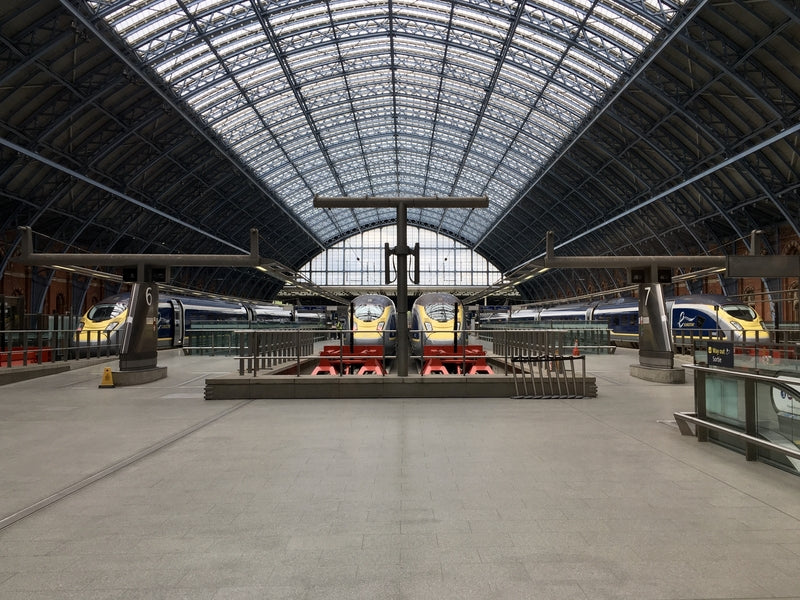
For more than 30 years, travelling by train between Britain and continental Europe has effectively meant one thing: Eurostar. That may be about to change. After years of proposals and speculation about competition through the Channel Tunnel, the prospect of new operators is becoming increasingly real. But getting a new international railway service running is not straightforward. Operators need access to the high-speed infrastructure, somewhere to maintain their trains, a suitable fleet and all the necessary safety and regulatory approvals before they can carry their first passengers. Both Trenitalia and Virgin are now making significant progress on those challenges — and there is a race to see who will get there first.
Trenitalia: first out of the blocks?
FS Group, the Italian state railway group behind Trenitalia, has made perhaps the most tangible progress of any potential competitor. It has ordered 19 new high-speed trains from Hitachi Rail, with the fleet intended to strengthen Trenitalia's operation in France and support its planned London–Paris service. The target is 2029. The proposed service would be operated by Trenitalia France, which already runs Frecciarossa services in France. The London–Paris operation would therefore be an extension of an existing international high-speed business rather than a completely new venture. Trenitalia France is also developing a new maintenance facility near Paris to support its expanding French operation and planned London service. This gives the company a solution to the question of where its trains will be maintained without relying on London's limited international depot capacity. FS Group says the new facility is being developed on a site recently awarded to the company. The big piece still missing is access to the railway infrastructure in Britain. Unlike Virgin, Trenitalia does not yet have a framework track access agreement with HS1 for its planned London service. Trenitalia France did, however, apply for access to the Temple Mills International depot in March 2025. That makes the 2029 target ambitious, but the combination of a train order and maintenance facility means Trenitalia is already well beyond the proposal stage. If it can secure the remaining access and approvals in time, Trenitalia could become the first operator to break Eurostar's long-standing dominance of the Channel Tunnel passenger market.
Virgin: making progress on the British side
Virgin has taken a rather different route into the market. On August 13, 2026, the Office of Rail and Road pre-approved a new framework track access agreement between HS1 and Virgin Trains. The agreement will allow Virgin to operate up to 20 new daily return services between London and Paris, Brussels or Amsterdam from October 1, 2030. The proposed services will be introduced in stages, with London–Paris planned for 2030, followed by Brussels and Amsterdam in 2031. The decision is a major step forward because access to HS1 is one of the essential pieces needed to reach the Channel Tunnel from London. Virgin has also already secured access to the Temple Mills International depot. In October 2025, the ORR approved Virgin's application for access to the depot, rejecting competing applications from Evolyn, Gemini and Trenitalia. The rolling stock is also progressing. Alstom has partnered with Virgin on its planned international fleet, with 12 Avelia Stream high-speed trains intended for the operation. There is still work to do. The latest ORR decision says Virgin must procure the rolling stock, secure access to other rail networks and obtain safety approvals from ORR and the relevant authorities in the EU. Nevertheless, Virgin now has two particularly important pieces of the puzzle in place: access to its London international depot and pre-approval for its HS1 track access.
A market that has attracted plenty of interest
Trenitalia and Virgin are not the first companies to look at the possibility of competing with Eurostar. Evolyn proposed London–Paris services using new high-speed trains, while Gemini Trains developed plans for services from Stratford International to Paris and Brussels. Both were among the companies seeking access to Temple Mills, alongside Trenitalia. The ORR ultimately selected Virgin, considering it to have the strongest prospects of making the best use of the available depot capacity. There have also been expressions of interest from established railway companies, including Deutsche Bahn and Renfe, although neither has progressed to launching a Channel Tunnel passenger service. The repeated interest from different operators is significant. The Channel Tunnel has capacity for more passenger traffic, and there is clearly an expectation that a larger international rail market could develop. For now, though, Trenitalia and Virgin are the two contenders making the most visible progress.
Eurostar has not been standing still
The arrival of competition is hardly news to Eurostar. The company has spent several years preparing for a more competitive international market, while also pursuing its own expansion plans. Eurostar is investing in additional rolling stock and wants to increase its capacity and expand its network. It will therefore be facing competition at the same time as it is trying to grow its own international business. That could make the next few years particularly interesting. For the first time since the Channel Tunnel opened, Eurostar will have to compete for passengers on routes where it has effectively been the only direct rail option.
What will competition actually mean?
For passengers, the obvious attraction is choice. For more than three decades, there has effectively been one railway company to choose when travelling directly through the Channel Tunnel. Competition could mean different fares, timetables, levels of service and destinations. But the potential prize is bigger than simply taking passengers from Eurostar. The Channel Tunnel and the high-speed railway on either side of it have the capacity to carry considerably more passengers than they do today. If new operators stimulate demand and persuade more people to choose rail instead of flying, driving or not travelling at all, the overall market could grow. That would be a very different outcome from simply dividing the existing market between several operators. It could also change the way people think about travelling between Britain and Europe. A London–Paris journey would no longer necessarily begin with the question of when Eurostar runs. It could become a question of which train to take. That is something railway passengers across much of continental Europe have taken for granted for years.
The race begins
There is still plenty that could happen between now and 2029. The international areas of both London St Pancras and Paris Gare du Nord are already known to experience significant crowding at busy times, even with the current Eurostar operation. Adding more operators and substantially increasing the number of passengers travelling through the stations is likely to require investment in the stations and the associated border-control facilities as well as on the railways themselves. Both of the leading candidates still have considerable work to do before their first trains can carry passengers through the tunnel. Eurostar, meanwhile, will continue to develop its own fleet and network while the new entrants prepare their services. But the direction of travel is becoming clear. For the first time since the Channel Tunnel opened in 1994, genuine competition in international passenger rail between Britain and continental Europe looks increasingly likely. Trenitalia is aiming to be first through the tunnel in 2029. Virgin is following in 2030. And after three decades of Eurostar being the only direct rail option, the race is finally on.
The Summer 2026 edition of the European Rail Timetable is available NOW in print and digital formats and is the perfect partner to our Rail Map Europe. Order at http://europeanrailtimetable.eu
Image: ID 224138296 © Marqz. Dreamstime.com