With the Summer 2026 timetable now in force, it is an appropriate moment to review developments amongst Europe's open-access operators. Since the December 2025 timetable change, a number of new services have been introduced, existing networks expanded and further international routes announced. Not every venture has prospered, however, and the period has also seen at least one operator withdraw from a newly entered market. The following survey looks at some of the more significant developments.
🇬🇧 Lumo – staged West Coast introduction
Lumo has introduced a service between London Euston and Stirling, making it the first open-access operator on the West Coast Main Line.
The route includes intermediate stops at Preston and Carlisle, before serving a number of stations in the wider Glasgow commuter area en route to Stirling.
The service is being introduced in stages, with initial operation running at a reduced level ahead of full timetable implementation. This phased rollout reflects delays in rolling stock availability, with the operator currently operating a partial service pattern rather than the full planned frequency.
Once fully introduced, it is expected to operate up to four trains per day in each direction, providing a regular long-distance link between London and central Scotland.
Full operation is now expected by late July, once additional rolling stock is available.
🇳🇱 GoVolta – early network adjustment after launch
GoVolta launched its first international open-access services in March 2026, operating from Amsterdam to Berlin and Hamburg.
In early May, the operator announced that due to weak loadings it would withdraw the Hamburg service in June and concentrate resources on the Amsterdam–Berlin corridor. Berlin services had generally been well patronised, whilst trains to Hamburg averaged around 60 per cent occupancy. From July, Berlin services will operate daily except Tuesdays.
The Amsterdam–Berlin route runs via Amersfoort, Deventer, Hengelo, Bad Bentheim, Osnabrück and Hannover.
GoVolta will expand its network in December 2026 with the introduction of an Amsterdam–Paris service via Haarlem, Den Haag, Rotterdam, Roosendaal, Antwerpen, Gent, Arras and Amiens. Tickets for the new service are already on sale.
🇸🇪 Snälltåget – new cross-border services and expanded network
Snälltåget has recently expanded its international and regional network with a series of new services linking Sweden, Denmark, Germany and Norway.
From May 2026, the operator introduced a new direct daytime service between Hamburg, København, Malmö and Stockholm. The service runs via Neumünster, Padborg, Kolding, Odense, København Syd, Malmö and onward through southern Sweden to Stockholm. The daytime train complements their existing Berlin–Hamburg–Stockholm night service and provides a daytime alternative on the same international corridor.
From June 2026, Snälltåget also launched a new direct service between Oslo and Malmö via Göteborg, operating daily in both directions. The route includes stops at Göteborg (Mölndal and Gamlestaden), Trollhättan, Varberg, Halmstad, Helsingborg, Lund and Malmö, with onward connections available towards København, Hamburg and Berlin.
These additions mean Snälltåget now operates a small but expanding set of international corridors, combining the Hamburg–København–Stockholm daytime service, the established Berlin–Hamburg–Stockholm night train, and the Oslo–Göteborg–Malmö service.
🇨🇿 Leo Express – network expansion and rolling stock instability
Leo Express has reintroduced services between Praha, Břeclav and Bratislava using Talgo rolling stock acquired from Renfe. However, the operation has been affected by reliability issues, with cancellations reported and some services replaced by short formations of conventional coaching stock.
Alongside this, the operator has expanded services on the Praha–Kraków–Warszawa route, forming part of its growing Central European international network.
A further major expansion is planned for the end of June 2026, when Leo Express is due to launch a new Frankfurt–Przemyśl service. The route will run via Praha, Ostrava and Kraków, providing a direct rail link between Germany and southern Poland. The service will allow passengers to travel between the two countries without changing trains in Praha or Kraków.
🇨🇿 RegioJet – brief foray into the Polish domestic market
RegioJet entered the Polish domestic market in September 2025 with services on the Kraków–Warszawa corridor. The operation was subsequently expanded to include services between Warszawa and Poznań, and from Kraków to Gdynia.
However, the venture proved short-lived. In April 2026, RegioJet announced that it would withdraw from the Polish domestic market, with services ending the following month.
RegioJet continues to operate its international services linking Praha with Kraków, Warszawa and Przemyśl, but its attempt to establish a domestic presence in Poland lasted less than a year.
🇧🇪 European Sleeper – expansion to Paris
European Sleeper expanded its network in March 2026 with the introduction of a new night train between Paris and Berlin.
The service operates three times per week, departing Paris on Tuesdays, Thursdays and Sundays, with return departures from Berlin on Mondays, Wednesdays and Fridays. The train is currently routed via Liège, providing a direct overnight connection between the French and German capitals.
A further expansion is planned later in 2026, when European Sleeper intends to launch a new Brussels–Milano night train.
A notable feature of many recent developments has been the emphasis on international services. Whilst Lumo's new route has strengthened domestic competition within Great Britain, much of the recent expansion has focused on cross-border corridors linking major cities across Europe.
Taken together, these developments illustrate the continued evolution of Europe's open-access sector. New routes have appeared, existing networks have expanded and operators have continued to test new international markets, particularly in the overnight sector. Whilst not every venture has proved successful, the pace of change since the December 2025 timetable change suggests that Europe's open-access railway market remains dynamic.
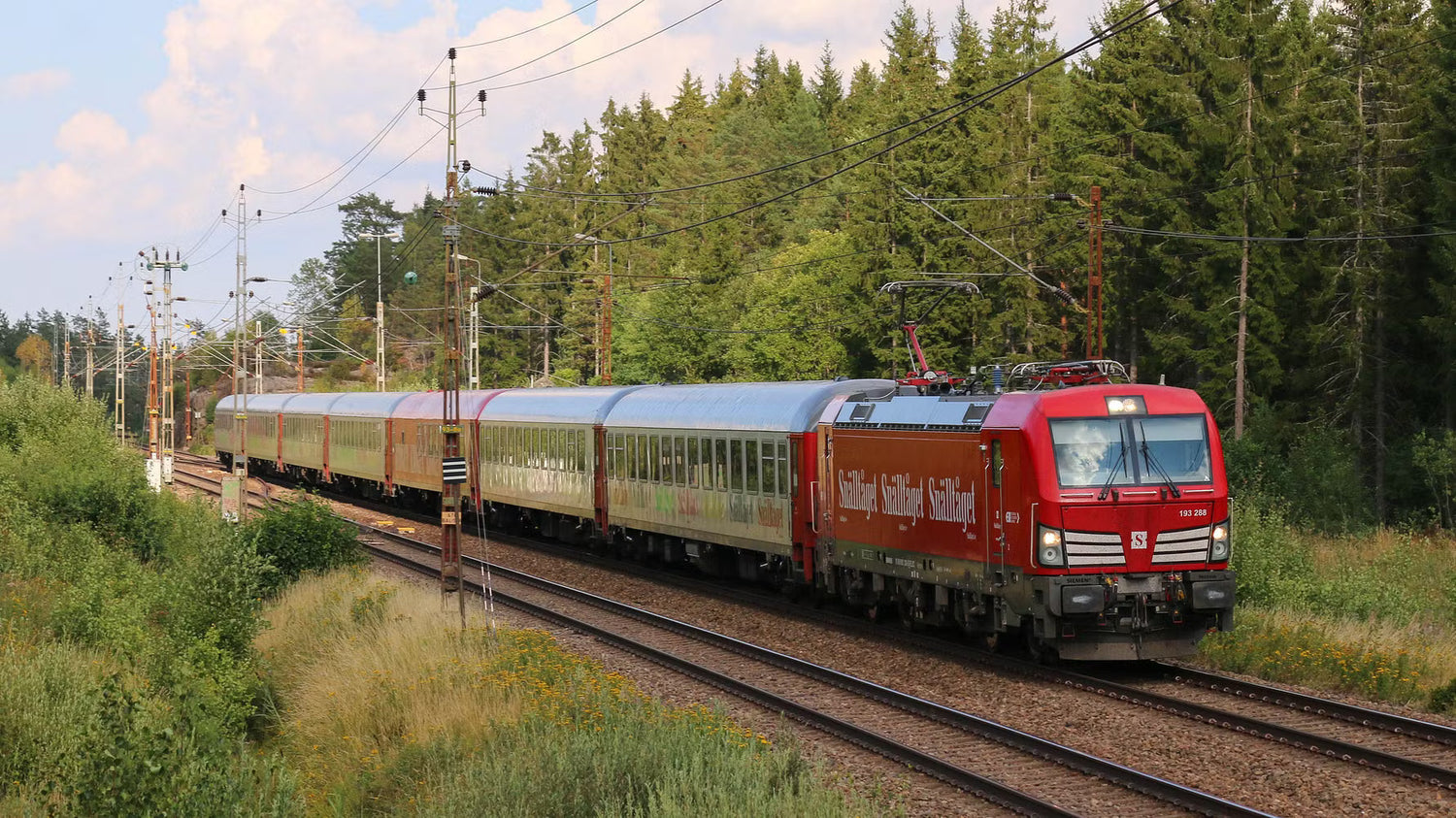
Image courtesy of Snälltåget.