Most travellers organise Europe in terms of destinations. Ask them about Paris, Praha or Roma and they might tell you about museums, architecture, restaurants or memorable holidays. Railway travellers often possess a rather different geography.
Their mental maps are populated by places such as Crewe, Brig and Limerick Junction. Not necessarily because they intend to visit them, but because they happen to be standing on a platform there while waiting for a connection. Over time, these places become strangely familiar.
A traveller may know exactly which platform their next train usually departs from. They may know where to find a coffee, how long it takes to cross the footbridge and whether five minutes is a comfortable connection or an invitation to sprint. They may even know which services are most likely to arrive late. What they may not know is very much about the place itself.
Crewe is perhaps Britain's finest example. Generations of rail passengers change trains there, sometimes repeatedly on the same journey. Many could probably navigate the station blindfolded. Far fewer could confidently describe what lies beyond the station forecourt.
It occupies a unique position in the railway imagination: everyone seems to have been there, yet very few people appear to have been intending to go there.
In fact, Crewe has been playing this role for so long that it found its way into popular culture. In the music hall song Oh! Mr Porter, first published in 1892, a passenger complains that she wants to go to Birmingham but somehow ends up in Crewe instead. More than a century later, countless rail travellers could probably sympathise. The details may have changed, but Crewe remains one of Britain's great railway crossroads.
Those who do venture beyond the station discover that Crewe has rather more railway heritage than its reputation suggests. The Crewe Heritage Centre is home to the only surviving British Rail Advanced Passenger Train and the preserved Crewe North Junction signal box, reminders of the role the town has played in Britain's railway story.
Ireland has its own equivalent in Limerick Junction. Unlike most famous places, it is known not for what happens there, but for where it allows travellers to go next. For countless passengers heading towards Limerick, Cork, Tralee or Waterford, it is a familiar name announced over the train's public address system, a place encountered between one journey and another.
Yet those who take the unusual step of leaving the station will discover that Limerick Junction is attached to a real place. The station stands in the small community of Ballykisteen, where a short walk leads to a hotel, a well-regarded gastro pub and Tipperary Racecourse. It turns out that not everyone there is waiting for a connection to Cork.
Further afield, Brig plays a similar role in Switzerland. Nestled at the foot of the Simplon route, it serves as a gateway between different parts of the country and onwards into Italy. Many travellers know it as the place where trains divide, combine or connect. They know the station well. The town itself remains something of a mystery.
Yet Brig is far more than simply a place to change trains. It sits at the heart of one of Switzerland's great mountain regions, within easy reach of destinations such as Zermatt, Saas-Fee, Bettmeralp and Fiesch. The thermal baths at Brigerbad attract visitors from across the region, while the town itself provides a pleasant base for exploring the Upper Valais. For many travellers, however, Brig remains the place where they hurry across the platform to make a connection.
These places matter because they sit at the crossroads of the network.
To most travellers, they are simply names on a departure board. To railway enthusiasts, they become landmarks. They are the places where routes converge, journeys pause briefly and decisions are made. They may never feature on a postcard, yet they acquire a significance entirely out of proportion to their size.
Occasionally, of course, curiosity wins.
After years of changing trains in the same place, a traveller finally decides to leave the station and explore. The experience can be surprisingly disorientating. The familiar station turns out to be attached to an actual town, populated by people who are not waiting for a connection and have no particular interest in whether the trains are running on time.
Sometimes the discovery is rewarding. Sometimes it simply confirms that the station was the most interesting part. Either way, a place that was once merely a connection becomes a destination in its own right.
The railway creates its own geography.
It elevates junctions, interchange stations and obscure border towns to a status they might never otherwise enjoy. Places that barely register in guidebooks become instantly recognisable to travellers who have passed through them dozens of times.
And somewhere out there, another future favourite connection station is waiting for its next train.
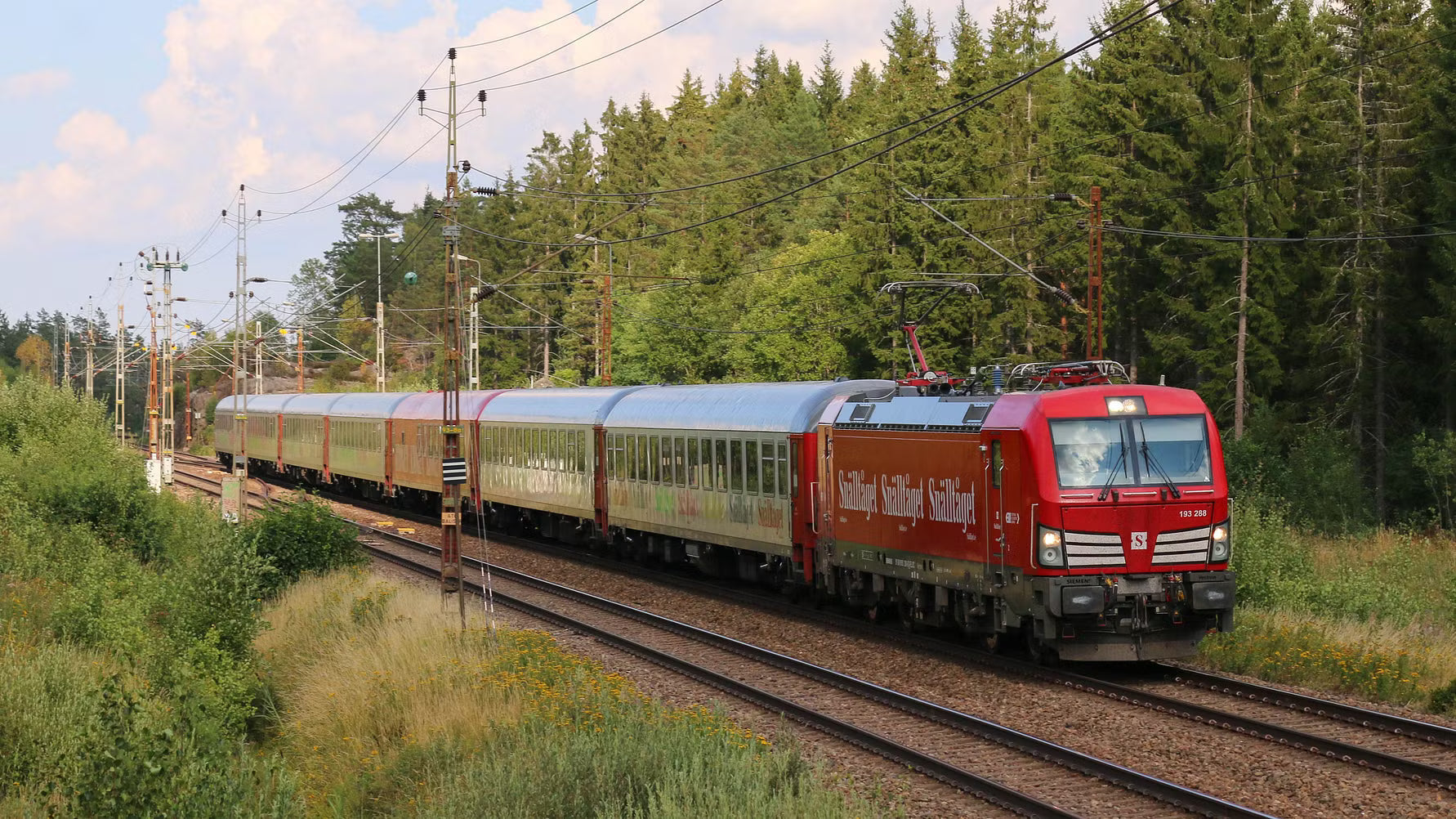
Image: ID 5349830 © Pontus Edenberg. Dreamstime.com