One of the joys of exploring Europe by rail is discovering that not every railway works quite as you expect.
Most journeys are straightforward. A train leaves one place, follows a route, and arrives somewhere else. But railways are shaped by geography, history and engineering challenges, and sometimes the result is a line that does things a little differently.
From trains that reverse before reaching their destination to services that cross an international border several times, these are four railway lines where the journey itself is part of the story.
Liskeard – Looe: the branch line that starts by going the wrong way
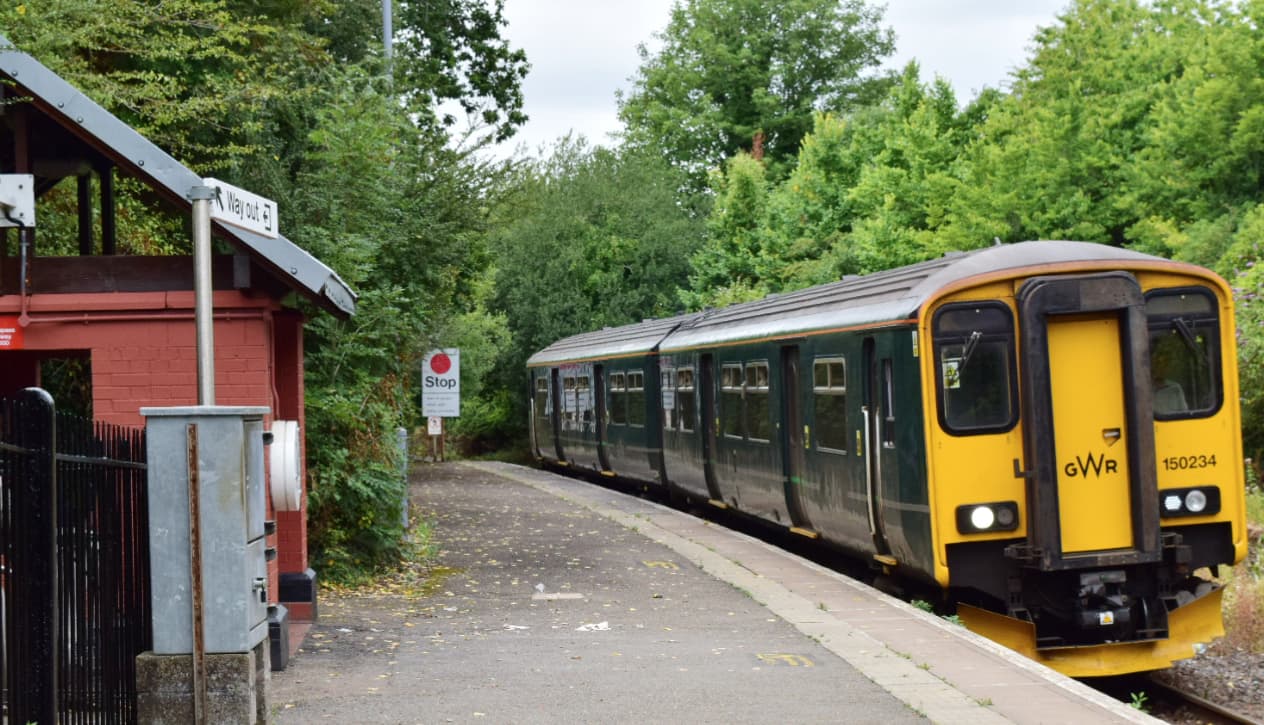
The Looe branch in Cornwall (ERT Table 111) is a short railway line, but it has one of the more unusual layouts you will find in Britain.
At Liskeard, the departure platform for trains to Looe is not alongside the main-line platforms. Instead, it is positioned at right angles to them, reflecting the way the branch was originally constructed.
A train leaving Liskeard first loops around before reaching Coombe Junction, where it reverses direction and continues along the valley towards Looe.
Coombe Junction has another curiosity of its own. Although every train reverses there, only two trains each day in each direction continue the short distance to serve Coombe Junction Halt itself.
For passengers, it is simply the way the railway works. For anyone interested in railway operations, it is a fascinating example of how historical layouts can create unusual movements that remain part of everyday service.
Chur – Arosa: when a railway becomes part of the street
The railway from Chur to Arosa in Switzerland (ERT Table 545) begins in a rather unexpected way.
Rather than immediately disappearing into the mountains, the line first runs through the streets of Chur, sharing space with everyday traffic. Over its first few kilometres, the railway operates through an urban environment, including a point where it crosses directly over a roundabout.
Soon afterwards, the character of the journey changes completely. The line climbs away from the city, passing through increasingly mountainous scenery before reaching Arosa.
Few railway journeys offer such a dramatic contrast between urban and alpine environments. One moment you are travelling through city streets; the next you are climbing towards the mountains.
München – Bayrischzell, Lenggries and Tegernsee: choose your carriage carefully
Services from München to Bayrischzell, Lenggries and Tegernsee (ERT Table 928) are usually formed of three separate portions when they leave the Bavarian capital.
The train travels together initially before splitting en route, with each portion continuing to a different destination.
For regular passengers, this is a practical way of providing direct services to three different destinations without requiring three separate trains from München.
For visitors unfamiliar with the route, however, there is one important piece of advice: make sure you are sitting in the correct portion of the train before departure.
It is a good reminder that railway operations can sometimes be more complicated than they appear from a simple journey search. The train on the platform may look like one service, but it is actually three journeys travelling together.
Görlitz – Zittau: the railway that crosses the border several times
The railway between Görlitz and Zittau (ERT Table 854), operated by Ostdeutsche Eisenbahn, demonstrates just how complicated borders can make railway routes.
Although it is a German-operated service, around 12 kilometres of the 34-kilometre route runs through Polish territory.
The most unusual station is Krzewina Zgorzelecka, located just across the border in Poland. Despite its location, the station primarily serves the German town of Ostritz, which is connected by a foot crossing.
The route becomes even more unusual near the Lusatian Neisse river, which forms the border between Germany and Poland. The railway crosses the river twice in quick succession, briefly returning to German territory before crossing back into Poland.
It is the kind of railway geography that would be difficult to imagine without seeing it on a map — or discovering it through a timetable.
Discovering Europe's unusual railways
The main railway routes of Europe are built around speed, frequency and connections between major cities.
But some of the most interesting journeys can be found on smaller routes, where history and geography have created something unexpected.
A branch line that reverses before reaching its destination, a railway that runs through city streets, a train that divides into three different routes, or a line that crosses an international border several times — these are the details that make exploring Europe's railway network so rewarding.
They are also the kind of details that can easily be missed when planning a journey from A to B. Sometimes the most memorable railway journeys are the ones that do things a little differently.
The Summer 2026 edition of the European Rail Timetable is available NOW in print and digital formats and is the perfect partner to our Rail Map Europe.
Photo courtesy of Great Western Railway.