Budapest–Beograd trains could return in December
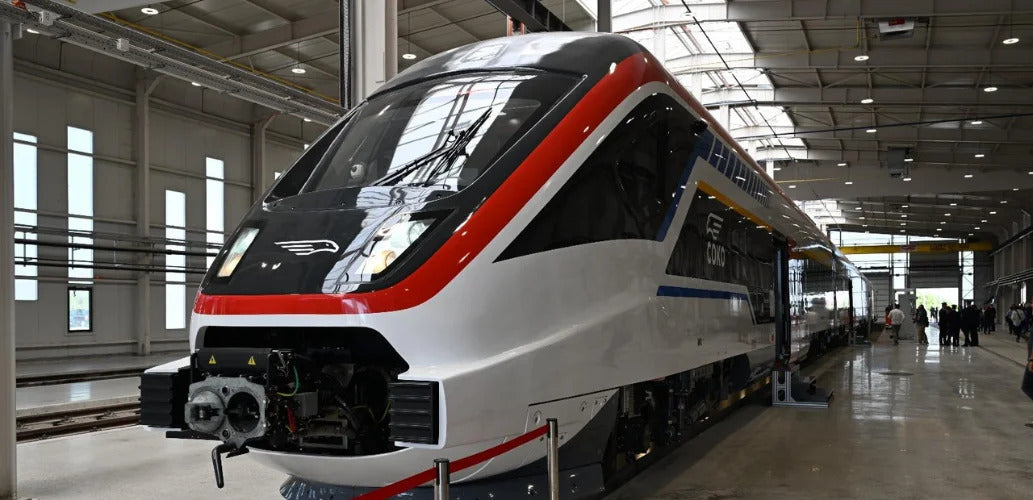
International passenger trains between Budapest and Beograd could resume on December 13, when the new European railway timetable takes effect. Hungarian Railways (MÁV) has published timings for two EuroCity services linking Wien, Budapest and the Serbian capital, although the opening date remains subject to final safety approvals.
The new service will use the upgraded Budapest–Beograd railway, a major infrastructure project that has been delayed repeatedly. Freight trains are already operating on the Hungarian section, while passenger services have been running between Beograd and Subotica in Serbia since October 2025.
Testing of the European Train Control System (ETCS) on the Hungarian section has now been completed successfully. However, the necessary operating and safety documentation is not yet complete, and the Hungarian authorities have stressed that passenger services will not begin until all requirements have been met.
The planned international journey time between Wien and Beograd is around six hours forty minutes. Trains will run at up to 160 km/h on the Hungarian section, with speeds of up to 200 km/h permitted on parts of the Serbian route.
The December launch would restore a direct international rail connection between the Hungarian and Serbian capitals after years of reconstruction and delays. For now, passengers will have to wait for final confirmation that the line is ready for regular international services.
Heurotrain becomes the latest hopeful in the open-access high-speed race
Dutch start-up Heurotrain has secured a ten-year framework agreement with French infrastructure manager SNCF Réseau, marking a step forward in its plans to challenge Eurostar on the Amsterdam–Paris route. However, the company still needs track access in Belgium and the Netherlands, funding and trains before its proposed services can begin.
The agreement covers train paths between Paris Nord and Wannehain, near the Belgian border, from December 2030 until the end of 2040. Heurotrain aims to launch services in 2030, with up to 16 return journeys daily between Amsterdam, Brussels and Paris. This would provide an hourly service in each direction, compared with around ten daily return services currently operated by Eurostar between Amsterdam and Paris.
The company intends to compete through lower fares, greater capacity and high-speed internet on board. Its website promises modern single deck trains and says it aims to keep seats available for passengers booking close to departure.
However, the French agreement secures only part of the proposed route. Heurotrain still needs access agreements in Belgium and the Netherlands, where ProRail and the Dutch government are planning a pilot scheme for longer-term capacity agreements on the HSL-Zuid high-speed line from 2028.
The company also faces the substantial challenge of acquiring a suitable fleet. Heurotrain says its train and maintenance concept has been defined but has not publicly identified the trains it intends to use. Its website says funding is expected to be completed in early 2027.
Heurotrain estimates that it needs between €400 million and €500 million to launch operations and has raised €125 million in private capital so far. Banks have reportedly indicated a willingness to provide substantial additional finance, subject to further equity investment.
The proposed 2030 launch therefore remains ambitious. Suitable high-speed trains must be procured, delivered and approved for international operation, while the company completes its funding and secures access across the full route. The French agreement is an important step, but it is not yet a guarantee that Heurotrain will be carrying passengers between Amsterdam and Paris in 2030.
Azerbaijan plans passenger trains to four more destinations
Azerbaijan Railways (ADY) plans to expand its passenger network to four more destinations by 2030, with new services to the country's northern and southern extremities among the proposed additions.
The railway signed a contract with Chinese manufacturer CRRC Zhuzhou Locomotive on October 27 for four new intercity electric trains. The agreement forms part of a wider programme to modernise the fleet and improve connections between the capital, Bakı, and regional destinations.
ADY says passenger services are to be gradually restored to Yalama, Minjivan and Astara by 2030. A separate passenger route between Bakı and Khankendi is also planned, although no opening date has been announced.
Yalama lies in the north of Azerbaijan, close to the Russian border, while Astara is in the south, near Iran. The proposed services would extend the reach of the passenger network towards both ends of the country. Minjivan and Khankendi, meanwhile, are in the south-west, in the wider Karabakh region.
The four new trains will each comprise seven carriages, measure approximately 135 metres and accommodate 434 seated passengers. They will offer first-class, business-class and standard accommodation, with a maximum operating speed of 140 km/h and a design speed of 160 km/h. Delivery is expected within two years.
The new order is the latest stage in ADY's wider programme to modernise its passenger fleet. The railway has already introduced Swiss-built Stadler FLIRT trains on regional and interregional routes, improving capacity and services on parts of the network. The additional Chinese-built trains are thought to be primarily intended for the Bakı–Qazax route, allowing existing trains to be reassigned elsewhere as ADY expands its passenger operations.
The railway is also considering proposals from international manufacturers for a further 20 passenger trains and 50 sleeping carriages for interregional services, although these have not yet been confirmed as orders.
Individual launch dates and timetables for the proposed new routes have not yet been announced.
Hourly trains to link Novara with Malpensa and Switzerland
An hourly extension of the TILO S50 will connect Novara with Malpensa airport, Varese and the Swiss canton of Ticino from March 1, 2027.
The service will run from Novara Nord, calling at Galliate and both terminals at Malpensa airport before continuing via Gallarate and Varese towards Switzerland. Trains will serve Lugano and Bellinzona, on the existing S50 route. The journey from Novara Nord to Malpensa Terminal 1 is expected to take around 30 minutes, with Terminal 2 reached in approximately 34 minutes.
The extension will restore a direct rail connection between Novara and Malpensa that last operated in 2006, when trains ran in connection with the Winter Olympics in Torino. It will also give passengers in Piemonte a direct link to the cross-border regional network serving Ticino, without changing trains at Malpensa or elsewhere.
The service will be operated by Trenord under its contract with Regione Lombardia, with TILO responsible for operational organisation. The project has been developed jointly by the regional governments of Piemonte and Lombardia.
The route will use existing railway infrastructure, including a connection at Sacconago that links the Novara–Saronno line with the line to Malpensa.
The Summer 2026 edition of the European Rail Timetable is available in print and digital formats and is the perfect partner to our Rail Map Europe.
Image courtesy of Srbijavoz.