Maybe it was a delayed connection? Maybe it was traffic in the taxi? Maybe you just should have been at the station a full twenty minutes ago – something I should really do. But the question for me is, when do you actually have to be on that platform for your train? When do you really need to be there? Despite the universality of timetables, the answer to this question is slightly different depending on which country you are in.
That sweet feeling of relief: you made it. The train doors have slammed shut behind you. You haven't missed the train. Thank god. You can now – an opportunity which you thought was falling out of your hands as you panted up the platform – turn into the carriage and take your seat. Now you get to swagger off – passing grey-faced passengers languishing in the vestibule (they don't have a seat reservation) who give you perplexed looks as you walk past (they were here too early of course).
But all this begs the question: how to avoid running, and how to avoid missing trains? Well, let's consider each country, because of course, with European railways, each country – and even each train company – can be different.
In my view, being at the platform two minutes early is my essential personal rule, but even that's cutting it fine. From my experience, France is amongst the most punctilious in Europe for its train departures. OUIGO demands five minutes of your time before departure, INOUI at least two. SNCF will almost always request that you sit in a TGV for a few minutes before leaving. But what you pay for in a momentary pause at your departure, you gain back in arriving at your destination on time. Frecciarossa and Italo say to be there one to two minutes before departure, but again, Italian trains aren't plagued with delays, so trying to cram in a quick aperitivo en route to the station is a foolish endeavour. They will leave without you, and you can make a booking somewhere at the other end with some certainty you will make it.
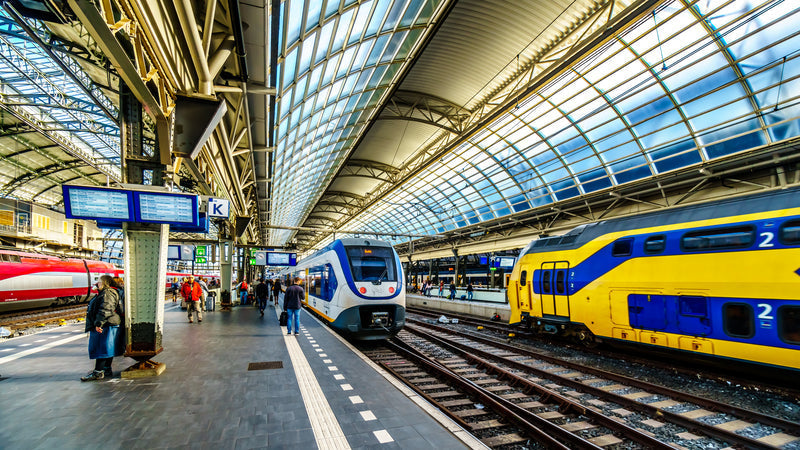
Once you step into Germanic Europe, however, things move towards tighter cut-offs, but also into a world of variables. The Dutch railway operator, NS – a system of ultra-frequent, metro-like InterCitys that shuttle around at five-minute frequencies – says that the doors can close up to 10 seconds before departure. But I implore you: be realistic – once the guard's whistle blows, that NS train is leaving. They really do not (and rightfully so) take well to people pushing onto the train once it's scheduled to leave.
In Germany, of course, there is every chance that your train is terribly delayed. This makes it rarer to actually miss one, because usually it's the train that's late, not you. DB says thirty seconds for the ICE as a minimum departure time, and that lax attitude compared to the French and Italians at least in part explains its problem with delays. If you dare, you can play a guessing game of what the ominous German train station announcement 'circa fünf bis zehn Minuten später' actually means. And decide to walk onto the platform at the time you think the train might actually arrive. If you really wanted to make running for the train even more exhilarating, that's the way to do it.
So, when do you really have to be on the platform? No matter where you are in Europe, the answer is earlier than the timetable says. And in some places, it’s quite a lot earlier. Not everyone can take advantage of the benefits of an Interrail sale and maximise flexibility. That said, we all know that finding ways to take the stress out of a rushed connection or endlessly late trains can make all the difference to the quality of a journey.
Because when you miss the train, you are likely to face a feeling of total dejection. The dispatcher is there to ward you away from the doors, the door buttons no longer lit up that tantalising green for entry – now they’re dark and inoperable. And, of course, your inner train geek will turn to check the signal far in the distance. Only one resolution then remains to hide your shame – a trip to the station watering hole, to drink away your sorrows. Or to drink a cheap coffee on a platform bench and furiously tap away at DB Navigator, to find another train.
Knowing what every train company means by departure times isn’t easy, but it will help you become one of those grey-faced people standing in the vestibule.
The Summer 2026 edition of the European Rail Timetable is available in print and digital formats and is the perfect partner to our Rail Map Europe. Order here.
Photo: ID 135627885. © Hpbfotos. Dreamstime.com