This week, a change came to the boat trains between Britain and Ireland. Ferry operators Stena Line and Irish Ferries now require a passport on Britain to Ireland crossings, as is already the case between Harwich and the Hook of Holland. This has put SailRail in the headlines for the wrong reasons but despite this new development, these routes are still worth taking. The five-minute passport check won't change what they have to offer the many slow travellers who use them. The SailRail journey itself takes you back in time. Reasonably cheap, flexible tickets with no dynamic pricing certainly feel like a return to the good old days. For a good price, this slow travel experience offers a unique perspective on the history of rail and of our islands more generally.
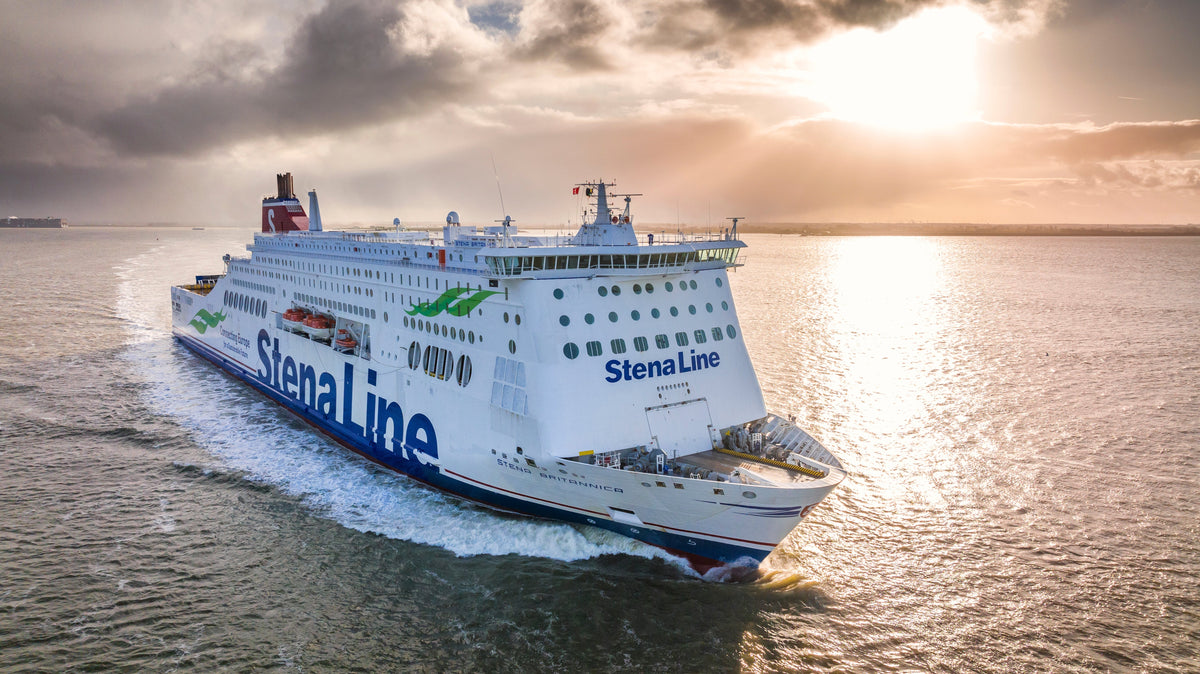
On my usual Dublin to London trip, the boat train is a rare choice, taken only when I've a great deal of time and choose a slower pace. Much like a slow local train in Spain or Italy, it is truly languid (averaging 40mph or even less). This slow, yet comfortable, journey forces you to create a mental distance between the island of Britain and its neighbours, one that reflects the real geography. The raw physicality of travel is inescapable, and it changes your view. Here, seas have to be crossed, mountains tunnelled through, and valley hillsides closely hugged. From departure to destination, a mental blockage of memories is created that alters how you think. For Dublin to London, it is first the seemingly endless expanse of water from the deck of the Stena Line ferry, then the sand and rock of North Wales, and finally the polka-dot grey and green of 'warehouse Britain' as you speed through England's Midlands to London. In our present era of Brexit and less-than-amicable Anglo-Irish relations, the unrelenting slowness of the ferry asks you to think of the past, to reflect on when this journey took days, not hours. And it raises questions: how did the terrain travelled over shape political decisions? How did it help construct the image of the 'other' – British, Irish or Dutch – held by all of us who live in north-western Europe?
The boat trains between Britain and Ireland have an illustrious and important history. The original packet steamer route from Dublin to Holyhead began in 1835, but within 15 years the service was transformed as Holyhead was connected to the national rail network. A quick connection from Holyhead to London made for a fast journey between Dublin and London for the time. By the mid-1850s, the Irish Mail, a name the train carried from 1848 to 2002, took about 10 hours and provided a vital political and military link from Britain to Ireland. Owing in part to emigration, traffic was heavy enough that in 1861 a specialised passenger station was opened at the ferry terminal on the North Wall in Dublin. Passengers from Ireland could now walk off their train and straight onto the mail packet steamer. This route played a central role in British and Irish history. In 1921, Michael Collins returned on the Irish Mail with the Anglo-Irish Treaty text. The Treaty he carried ended one war, granted Ireland independence, and provoked another, bloodier, civil war. Across the 20th century, however, the flow of traffic from Ireland to England was heavier than in the opposite direction, as waves of Irish emigrants arrived in London and the rest of England. Today, the boat train – and even more so its coach cousin – plays an important role in migration to Ireland. The introduction of passport controls was, in part, an effort to regulate this flow of people more closely. The boat train is much less used today, and a great deal of the infrastructure – even the branding – in places like Holyhead reflects the halcyon days of the Irish Mail in the late 1990s. It's like stepping into a different world, albeit one you reach after four hours on a sleek intercity train.
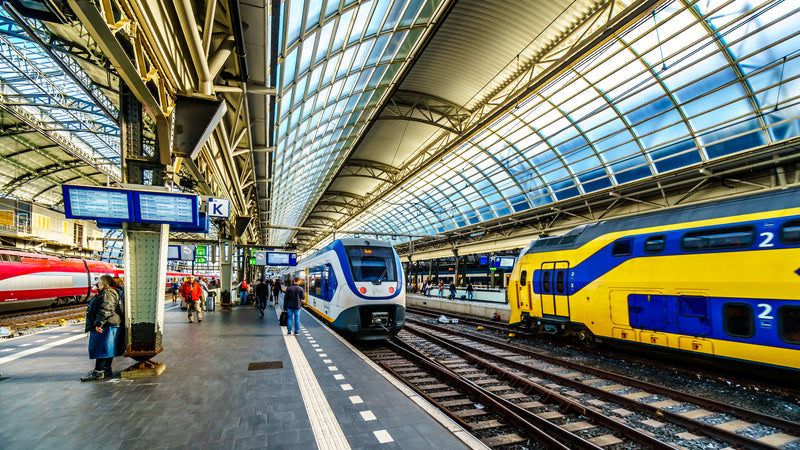
The London to The Netherlands route has an equally illustrious history. Look at any old Trans-Europe Express poster: many routes begin in Rotterdam or Amsterdam, but the Hook of Holland, a port on the west coast of the Netherlands, was uniquely linked to the network. This, of course, was to indicate the onward connection to Britain by boat. The Hook of Holland route runs from Liverpool Street to Harwich, then by ferry to the Hook of Holland, and on by train to cities of the continent. It began in the 1890s but played its most important role during the Kindertransport. Across the months of 1938, thousands of Jewish children were sent to Britain by train and boat on this route to escape Nazi persecution. Many of these children had no passports. The bureaucratic denial of travel documents to the children plagued the already complicated evacuation effort. In the post-war era, trains ran from the Hook of Holland south to Cologne – and even on to places like Basel, most famously on the TEE Rheingold. In contrast to the Irish route, this service was less used by the turn of the 21st century. In 2017 came the regrettable end of the mainline train services between Rotterdam and the Hook of Holland. They were replaced by the Rotterdam Metro, which is excellent, if a little less elegant and comfortable than the regional trains that came before it. Today, travellers also need to contend with post-Brexit passport rules of course. Compared with the Eurostar connection from St Pancras to Rotterdam, this route is considerably cheaper than Eurostar at its peak pricing, at around £79 and up for the ferry, plus a further £50 to £200 or so for a cabin if you take the night sailing. Many seasoned travel pros and some of those newer to surface travel take the boat train to Holland because of its easy onward connections. By taking the direct train from Amsterdam to Berlin, this ferry connection can open up Eastern Europe. With only two or three changes from the Hook of Holland, Warsaw and Prague can be reached by day trains alone.
The infrastructure at the ports and train stations isn't the most modern and, at times, is admittedly decrepit. The Holyhead ferry terminal, for example, is a place no traveller should have to stay for more than an hour. But the trains on this route are much newer. From London to Holyhead, the new Avanti Evero Class 805s replaced the ageing Voyagers in 2023 and provided a serious upgrade in comfort and cleanliness. For the London to Harwich International route, a sprightly Greater Anglia Class 720 will whisk you from Liverpool Street out to the port in less than ninety minutes. This direct train only runs only twice daily, to connect with the morning and evening departures to Holland. On the old Irish Mail route to Holyhead, Avanti runs direct trains taking about three hours and fifty minutes and runs four or five services daily (depending on the day of the week). At Holyhead, however, the station and port infrastructure has seen better days. And in Dublin there is no onward rail connection into the city centre. A shuttle bus, though well run, is your only choice.
In the past, there was a far more sprawling network of boat trains connecting London to Britain's ports. Even in the 1980s, one could easily take a train from London to the continent via Dover or Folkestone, by day or by night. Now, only the Harwich and Holyhead routes remain. In the post-war years, British Rail connected Victoria and Charing Cross to its regular cross-channel ferry services, later run under the Sealink name as a division of the railway. The famous Seaspeed hovercraft was operated as a joint British Rail–SNCF venture, so important was ferry traffic to both railway companies. Today, an echo of the old Sealink name lives on in SailLink, thanks to the efforts of Andrew Simons, who runs a boutique catamaran crossing between Dover and Boulogne-sur-Mer. Each summer, he skippers his catamaran on a leisurely crossing of four to six hours, carrying no more than 12 people (bikes permitted). The service is all the more important since only P&O carries foot passengers between Dover and Calais, and then only on selected sailings. So, the old boat train can live on, albeit with a bike ride at either end.
The boat train as a concept lost its prominence by dint of its remarkable slowness. But for many, that slowness is what uniquely gives it its appeal. Even a night train, the current epitome of slow travel, is still much faster than the slow, lumberous ferry. The argument for the boat train is that you see the world as it was before low-cost air travel. It also allows you to remember those who travelled well before passports were even compulsory. After arrival, there is nothing quite like the slight heaviness in your shoulders you feel. It is a well-deserved feeling that isn't heavy or restrictive, but instead is a reminder that your journey was hard earned over hours. That tiredness and the blur of different landscapes sit with you as you arrive at the platform. The stamp in your passport is a minor inconvenience, that I recommend paying for.
The Summer 2026 edition of the European Rail Timetable is available in print and digital formats and is the perfect partner to our Rail Map Europe. Order here.
Image copyright Flyliedutch / Arnoud Lievense. Courtesy of Stena Line.