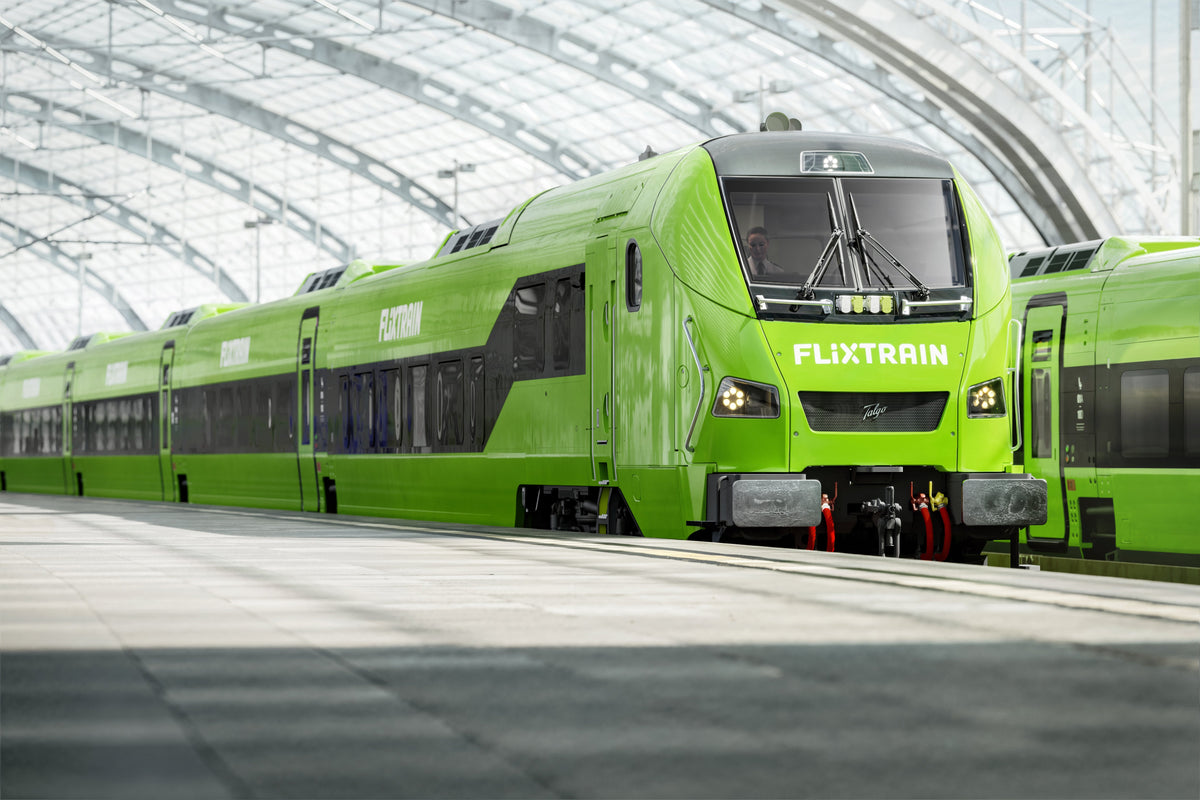
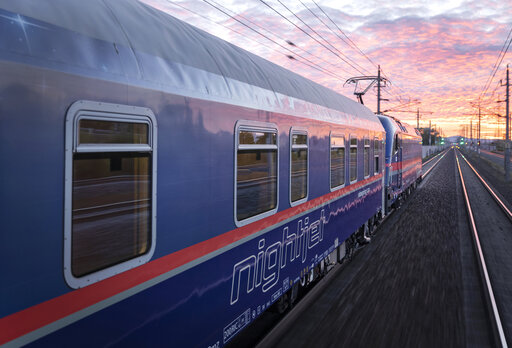
Night trains are in the news … again. Across Europe, new companies are springing up determined to be able to rethink the model. From sleeping pods to business class-style seats, everyone is looking to modernise sleeping on rails while also keeping prices manageable.
It was against this background that I recently took the night train from Vienna to Split - an altogether more traditional product with one seated carriage, three with private sleeper compartments and one couchette car. In addition - in what increasingly feels like a greater and greater throwback - the train has two car carriers for motorailers.
At 15.07 hours, this is a relatively long European night train and both the distance covered and the length of time it takes turn it into a real pleasure of a journey. It takes you from almost the central point of central Europe to the continent’s southern reaches. On the day I travelled (thanks to a delay), a NightJet to Brussels set off just a few minutes before the Split service from the same platform taking passengers off to the European north and the Channel Tunnel. This is one of the great joys of Central European railway stations -which for those of us raised on an island in the North Sea - never ceases to impress. From Vienna virtually all of Europe seems to be within touching distance by simple, direct rail links.
The stock used on this journey lacks the glitz and glamour of many of the more modern incomers to the night train market. I had a private sleeper compartment with its customary small sink and three seat layout in the day mode. For a sole occupant, it is capacious without being luxurious - plenty of space to spread out without being able to walk around. And there is a small but big enough table to eat from (this has to be removed in night mode where a cupholder and net to hold a book come in very handy). Some of the furnishing is a little tired and there are still some quirks which ÖBB could well take some action against - the most important of which is the relative lack of decently located power sockets.
Several journeys on ÖBB’s otherwise excellent night train fleet have taught me to be somewhat suspicious of the food served by the carriage attendants. All microwavable, mostly mushy pasta, it is not something for the gourmet or even the fan of on-board catering. That said, one of the advantages of Vienna Hbf is its plethora of restaurants. I boarded this train with a tray of sushi, some pakora and an Austrian beer (meaning I would not have to resort to the ÖBB bottle of complimentary sparkling wine in the compartment). Everything I bought came from within the station’s wide selection of shops and restaurants.
As with all night trains, much of the experience of travelling is dependent on one’s fellow passengers. While I tucked into my raw fish, I realised that most of the rest of my carriage had been booked by one group of Polish bikers off to explore the Balkans on two (motorised) wheels. Although the private compartments meant we never engaged in more than a polite nod in the corridor, they were good humoured and respectful. That said, I was relieved to be able to close my door as they drank through the early part of the journey. The newcomers to the market seem to be setting even less stock by soundproofing with many offering thin partitions between sleepers - the comfort of a closing door does feel like a luxury worth paying for.
As we trundled through southern Austria, I read my book and scrolled on my phone. On this longer journey, the amount of time you have to settle into your circumstances for the night is a boon, as it allows the train to become more than just a functional space. On so many night trains (including perhaps the new Nox service that is to run between Hamburg and Berlin), you barely board before you have to go into night mode if you want any chance of a few hours of sleep. One of the great pleasures of this journey was this additional time in both the evening and the morning to enjoy being on the train and taking in its route across Europe.
As we approached the Slovenian border though, my eyes began to droop and I went to find the attendant to put my bed down for me. Profitability in overnight travel will almost certainly lead to having space which does not require an underpaid person to go down the train flipping out beds, and helping passengers find the barely hidden spare pillows. Losing them may well be the price we have to pay for a more comprehensive, healthier network but it is a crying shame. I chatted to the man on my train about his time working for ÖBB, his favourite journeys and the fact he has never really explored the destinations he goes to on night trains.
I slept deeply. More deeply than I can ever remember doing on a night train. I cannot fully explain why this might have been. The hard product is one I know well, the train makes all the usual stops in the middle of the night (although not having a German border guard banging on the door at 3am is one major benefit of going south not north out of Vienna) and the temperature control in the compartment was as unreliable as usual. That said, I think the time acclimatising in the evening plus some general exhaustion were to thank.
I woke up just before 7 as light began to come through the window. It was foggy outside but still it was clear that we were in a different part of Europe. The limestone mountains of the Balkans began to reveal more and more of themselves as the sun came up and burned off the morning mist. As I tucked into the ÖBB bread roll and red pepper spread, I felt travelling on a night train like this one really is one of Europe’s great pleasures. Passing through remote mountain villages and across beautiful plains before descending down to the sea, it is hard to imagine a better way to wake up across the continent. As I sipped the volcanically hot coffee, I could not help wondering what the views were like for the Nightjet passengers in Brussels 1,000 miles away to the north.
Wherever the never ending night train developments take us next, operators would do well to remember that profitability should not trump the pleasure of train travel. Does this route make lots of money? I don’t know but I somehow doubt it. Would I take it again? In a 15 hour and seven minute flash.
Some practical info:
- The train runs three times a week on Wednesday, Friday and Sunday
- Although a EuroNight, the stock and product is all ÖBB’s and you are best off making bookings on their site (bookings for this train are not eligible for DB BahnBonus points)
- Private compartments are reasonably expensive (as with all ÖBB night trains) but well worth it if you can stretch to the cost. That said, on the night (a Sunday in mid September) I was travelling the couchettes were largely empty
- You get an amenity kit and some water in the private compartments from ÖBB as well as a bottle of generally warm and not very nice sparkling wine
- Split Station is excellently located to get into the Old Town. Should you just want to visit the city for the day before exploring other parts of Croatia, there are lots of affordable luggage options around the station. Those in the old station building itself are the cheapest (2€/day/locker) and you need Euro coins to get a token to operate the lockers
- Rail connections from Split station are relatively limited but there are extensive bus connections which depart from the same place
The Summer 2026 edition of the European Rail Timetable is available in print and digital formats and is the perfect partner to our Rail Map Europe. Order here.
Image copyright and courtesy of ÖBB / Harald Eisenberger