In the past month, close to 100,000 people regained their rail connection in England. After decades of campaigning, small towns and suburbs from Birmingham in the West Midlands to Northumberland in the North East are finally back on the national rail network. While this is good news, when compared to investments on the continent these schemes don’t pass muster. They are the mere reopening of lines that should never have been closed. Reversing the errors of a previous generation – turning the railway clock back to 1963 – is far from real progress.
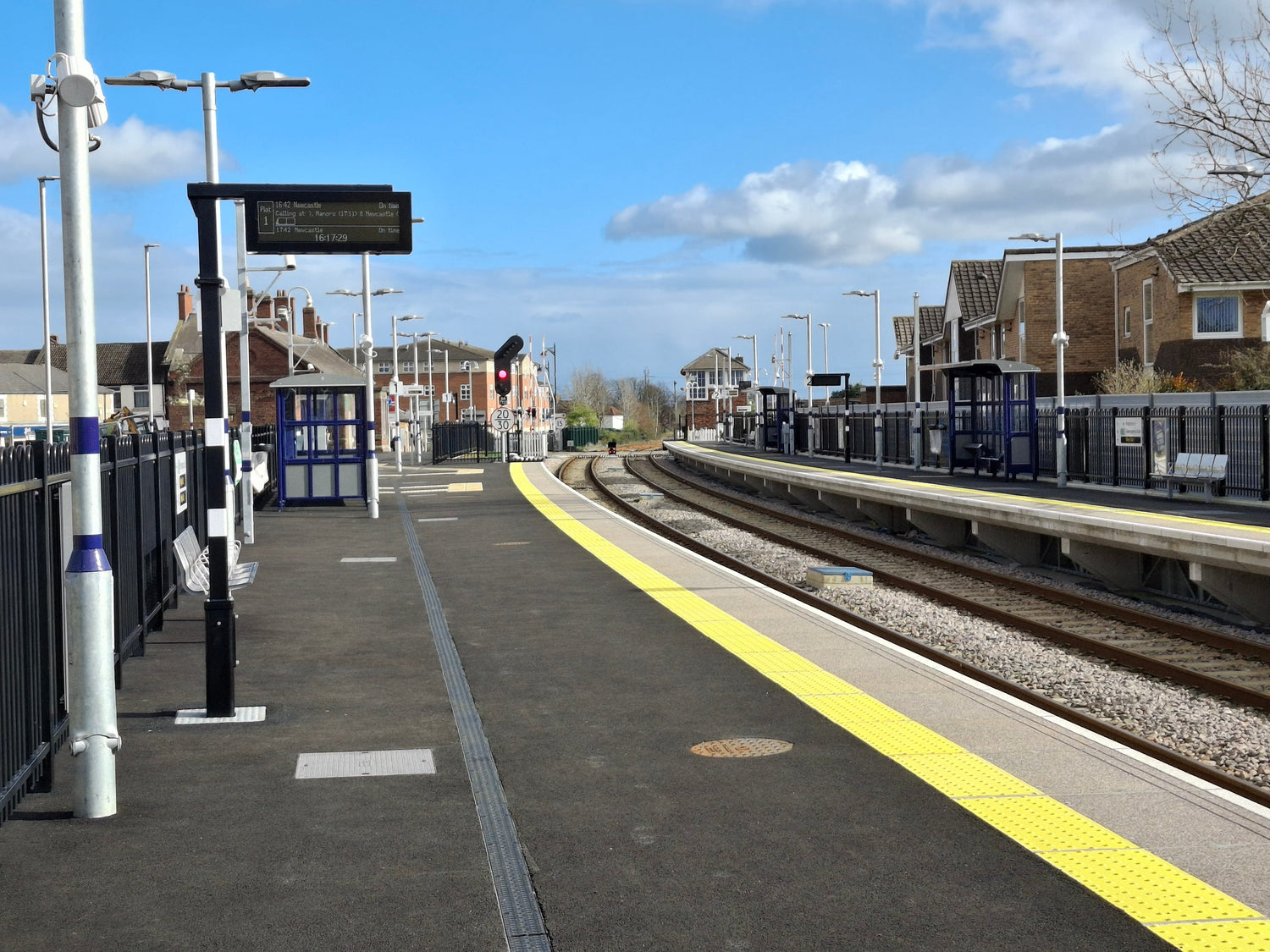
Half a dozen communities in England received this restorative Easter gift from the DfT. Two new stations in the West Midlands at Darlaston and Willenhall (March 19), another in Bedlington on the reactivated Northumberland Line (March 29) and three more on Birmingham’s Camp Hill Line (April 7). Despite their delays and overruns, they are seemingly very successful projects – at least in terms of local and rail press reaction.
But we must ask this question: is this all that Britain can build?
Compared to the new Firenze Belfiore station (a new bypass station for high-speed trains, replacing Florence’s Santa Maria Novella from 2028) or even the much-delayed S15 S-Bahn shuttle between Berlin’s Hauptbahnhof and Wedding Bahnhof, these stations are small fry.
In a country with half-a-dozen cancelled or catatonic major rail projects, from HS2 to East West Rail, are these ‘Potemkin stations’ the most that we can expect in the coming decade? Boris Johnson’s transport adviser Andrew Gilligan proposed a new national focus on ‘boring little things’ like infill railway stations rather than investing in HS2. But this Jackson Pollock approach, a slap and dash station here, a new cycle lane there, gifts us a trail of deceptive symbolism worthy of Grigory himself. Yes, a few new stations for some politicians to cut ribbons, but not the national network we need to compete with the car. A train every thirty minutes in a dense suburb like Stirchley is far from an S-Bahn line or, perhaps more realistically, a Dublin DART line.
These projects, albeit helpful for the local communities that they serve, do little to create the coherent national network Boris Johnson and Andrew Gilligan killed off. Built by local fiefdoms whilst national infrastructure projects fall apart at the seams, I’m sure mayors like Andy Street who helped kickstart the Camp Hill reopening would have preferred a completed HS2 to sticking plasters like this. The Camp Hill line, originally terminating at the 1838-built Curzon Street which is now the site of the newly-truncated HS2 station, shows the retreat to a nostalgia of little projects by local leaders, a phenomenon which is likely to continue into the future.
The Camp Hill Line runs parallel to the busy ‘Cross-City Line’, albeit on a more southerly approach into Birmingham. The wartime closure of its three suburban stations in 1941 relegated the line to infrequent freight and non-stopping cross-country trains until earlier this month. This is in stark contrast to its northerly sister, the Cross-City route, which British Rail electrified in 1994 and upgraded to a 10–15-minute train frequency over the subsequent decades. The Cross-City rejoins the Camp Hill Line south-west of the city centre at Kings Norton – where the present two-trains-per-hour service on the Camp Hill from New Street terminates.
On the Camp Hill Line, the three new stations at Pineapple Road, Kings Heath, and Moseley Village that opened on April 7 are smart and modern. Contactless payment will arrive in 2030, and all are fully accessible. While the new stations are not architectural masterpieces, they are far from eyesores. After a 2024 cost review imposed because of a 45% cost overrun, the stations are now good examples of value engineering done well. These are attractive urban stations, not far from what London Overground has to offer. This is a necessary requirement to convince car users to switch to using the train, and to also compete with the four frequent bus services into the city centre offered by National Express West Midlands. With a mere ten-minute journey from Moseley station to New Street by train – the buses take at least three times longer in the morning peak – here is where the political spin meets practical reality.
A friend from Moseley repeated a good line to me over the years when I visited the area: it’ll be 10 minutes to Curzon Street and then 50 more to London by HS2. Instead, his new rail line crawls over substandard infrastructure into the delay-ridden New Street station. Good luck commuting to London with that!
Ten miles north, Darlaston and Willenhall stations are close to identical to the Camp Hill stations, but these new stops prompt urban regeneration rather than compete with cars. In a rare moment of continuity, the original BR London Midland Region sign, in its confident white-on-maroon lettering, was gifted back by local activists to their station for reuse. It now proudly hangs, albeit in marked contrast to the modern black and orange colour scheme of West Midlands Trains who operate the station. Much like their Camp Hill neighbours, Willenhall and Darlaston have been gifted a quick service into New Street, the journey taking 23 minutes on the Birmingham-Shrewsbury line. For local labour markets, a new rail connection transforms these areas into viable commuter country – expanding the pool of workers to hire from for West Midlands-based firms.
The impact of the new rail corridors is best shown by a cross-city trip. A Moseley to Willenhall journey took an hour and fifty minutes by bus in February. Today, it’s fifty minutes by train. A ‘rail revolution’ indeed, as the press release labels it. But this time saving shows that there is low-hanging fruit, because of the relative underinvestment outside of the South East in urban rail infrastructure. The Birmingham reopenings cost roughly £200m, by contrast the Battersea tube extension that added two stops to TfL’s network had a £1bn price tag. The Midlands Rail Hub project, a £1.75bn scheme to free up capacity into Birmingham by running trains through the relatively underused Snow Hill tunnel, will add a few suburban paths through the city. A smart scheme I’ll admit, but the great potential for urban rail in Birmingham requires a city-region project with far greater scope. Only HS2 could have been the catalyst for this bigger Picc-Vic style plan, with New Street finally becoming a proper suburban rail hub. Thus, allowing the grotty Cross-Country 220s and the blue-red-green zones system to be replaced by a truly world-class Midlands S-Bahn.
In Northumberland, Bedlington (opened March 29) is the sixth and final station of the newly reopened Northumberland Line, originally closed to passengers in 1964. Built with ‘Restoring Your Railway’ funding, the line runs for 30km north-east from Newcastle to Ashington via the port town of Blyth. The area, famous for its role as the first ‘Red Wall’ seat to swing to Johnson’s Tories in the 2019 election, has gradually declined after losing its rail connection to Newcastle and its large coal mining industry in the 1980s. This line’s integration into local transport is even better than in Birmingham. Perhaps as a sign of things to come under the promised ‘joined up thinking’ of Great British Railways, the line is fully integrated into the Tyne and Wear Metro contactless ticketing system and even features on the Metro’s map. At present, passenger numbers are running at triple the expected amount and plans to extend the line – a year after opening – are already proceeding. A good scheme, but it’s constrained by capacity west of Manors station, into Newcastle’s main station. This is the exact kind of congestion caused by LNER Edinburgh-London services that HS2 would reroute and thus fix. This in turn would free up Newcastle for a suburban rail renaissance like Birmingham. Not the current well-intentioned but half-baked nostalgia currently on offer.
These new stations will be a great benefit to the communities they serve. But without fixing the heart of British railways, our mainline network, all that we will be left with is these stick-on Network North-style schemes that don’t fix our problems. Reactivations are a great addition – but they need to add on to something bigger. Something like HS2.
Image: Bedlington Railway Station courtesy of Alec Coates, CC BY 4.0 <https://creativecommons.org/licenses/by/4.0>, via Wikimedia Commons