The start of the 2026 timetable has once again underlined the continuing expansion and growing strategic importance of OUIGO, SNCF’s low-cost high-speed rail brand. Launched in 2013 as a supplementary offer alongside established TGV services, OUIGO has since developed into a core component of SNCF’s network strategy and a significant presence within the wider European high-speed rail market.
In its early years, OUIGO primarily operated as an additional capacity layer, targeting price-sensitive travellers without displacing premium services. That position has changed considerably. OUIGO now occupies high-value timetable paths previously assigned to full-service TGVs, indicating a deliberate reallocation of resources towards the low-cost segment. The network has extended across increasingly strategic corridors, including routes reaching Hendaye on the Spanish border, demonstrating that OUIGO is now firmly embedded in the mainstream of French high-speed operations rather than restricted to secondary flows.
Domestically, SNCF is continuing to reshape the deployment of high-speed capacity. Future planning places greater emphasis on non-Paris-centric connectivity, with one notable development being the proposed Bordeaux – Lyon OUIGO service, offering a significant cross-country route without transiting the capital. SNCF expects OUIGO to represent around 30 per cent of all high-speed services by 2030, compared with approximately 20 per cent today. This growth will be supported by the phased introduction of new TGV-M trains into the premium fleet, enabling the cascading of existing rolling stock to OUIGO and facilitating further expansion without compromising speed or performance.
Beyond France, OUIGO is now an established operator in Spain, competing directly with RENFE and Iryo. The Spanish market has provided a proving ground in which SNCF has demonstrated the viability of running a low-cost domestic operation outside its home territory. Further development in Italy remains under consideration, reflecting both ongoing liberalisation and the broader trend of state operators increasingly competing within one another’s domestic markets. As European high-speed rail becomes progressively more open and competitive, OUIGO is emerging as one of the potential leaders of this shift.
Passenger reaction to OUIGO remains mixed. Compared with traditional TGV services, OUIGO offers fewer amenities, higher seating density and a more clearly defined low-cost ethos. However, the brand continues to attract strong demand because it delivers significantly lower fares while retaining the core advantages of high-speed rail
OUIGO’s development suggests that low-cost high-speed rail has moved beyond the experimental phase and is becoming an established structural element within the European rail system. It is now a central strategic instrument for SNCF and an increasingly influential player within Europe’s ever more liberalised high-speed markets. As rolling stock cascades continue, network adjustments progress and international expansion remains under active consideration, OUIGO appears set to remain a prominent and consequential feature of the European rail landscape for the foreseeable future.
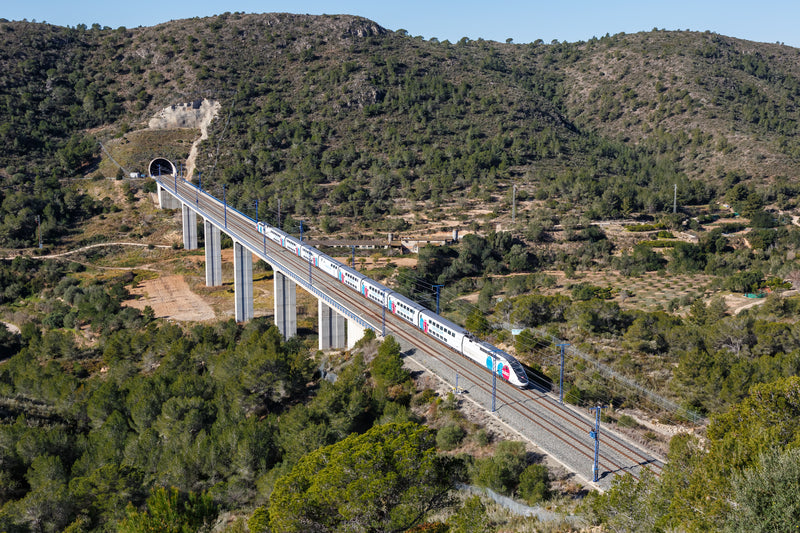
Photo: TGV Euroduplex high-speed train of Ouigo Espana SNCF on the Madrid - Barcelona high speed rail railway line near Roda de Bera in Spain. ID 249026203. © Boarding1now. Dreamstime.com