
Open Access on the Move: A Spring–Summer Surge in New European Train Services
Over the next three months, Europe’s open-access rail market will see one of its most dynamic periods in recent years. From Central Europe to Scandinavia, a wave of new and expanded services will reshape key corridors, offering more choice, sharper pricing and distinctive onboard concepts.
Four operators are driving this momentum: Leo Express, WESTbahn, GoVolta, and European Sleeper. Each is expanding in a different way — from high-speed daytime services and ultra-low fares to revived overnight links between major capitals. What unites them is a shared ambition: to make international rail more competitive, more accessible and more attractive at a time when passengers are increasingly weighing up alternatives to short-haul flights and long car journeys.
LEO EXPRESS: Poland at the Centre of a Growing Network
The coming months represent a defining moment for Leo Express in Poland and across Central Europe. From March 1, 2026, the operator launches regular services on the Warszawa – Kraków – Praha axis, establishing a firm presence on one of Poland’s most important domestic routes while reinforcing international connectivity to the Czech Republic.
Initially, Leo Express will operate two daily return services on the Warszawa – Kraków – Praha route, alongside up to four daily return connections on the Kraków – Praha section until June 24. From June 25, the offer expands significantly. Domestic services between Warszawa and Kraków double to four return trains per day in each direction, while international services between Warszawa and Praha increase to three daily return connections.
This frequency uplift is particularly significant on the Warszawa – Kraków corridor, one of Poland’s busiest intercity markets. By offering competitive pricing — fares from just 8 zł on the domestic section and from 49 zł for the full Warszawa – Praha journey — Leo Express is positioning itself as a serious challenger. According to CEO Peter Köhler, strong sales and positive customer feedback have underpinned the decision to reinforce services so quickly after launch.
From June 25, timetable refinements further enhance connectivity. A train departing Praha at 08:23 will continue beyond Kraków to Warszawa, arriving at 18:54. An evening domestic return departs Warszawa at 19:49, reaching Kraków at 22:51. Morning links are equally structured to support both business and leisure travel, with a 07:37 departure from Kraków arriving in Warszawa at 10:51, followed by an 11:01 international departure via Kraków to Praha, arriving at 20:43. The careful sequencing of these services creates practical day-return and weekend-break opportunities while strengthening through connectivity.
Leo Express is also broadening its footprint beyond Poland. From June 25, a new long-distance international route will link Przemyśl, Kraków, Ostrava, Praha, Dresden, Leipzig and Frankfurt am Main. This marks entry into the German market and establishes a substantial east–west corridor across Central Europe. For travellers, it opens new direct journey possibilities without reliance on incumbent operators.
Further developments reinforce the sense of expansion. From March 7, a Kraków – Lviv bus service will connect with Leo Express trains, extending reach towards western Ukraine. From April 30, new international services between Praha and Bratislava — via Pardubice, Olomouc and Staré Město u Uherského Hradiště — restore direct links from the Slovácko and Zlín regions to the Czech capital.
Operational adjustments reflect infrastructure changes elsewhere in the network, including electrification works at Žilina. During temporary service suspensions on certain Slovak routes, Talgo rolling stock will be deployed on selected lines such as Bratislava – Praha, demonstrating the operator’s flexibility in asset management.
Taken together, these changes show Leo Express evolving from a niche Central European operator into a broader regional network player. The next three months will be crucial in embedding its brand in Poland while laying foundations for further international growth.
WESTbahn: High-Speed Competition on Austria’s Southern Line
In Austria, WESTbahn is entering new territory. From March 1, 2026, the operator begins services from Wien Hauptbahnhof via Wien Meidling and Wiener Neustadt to Bruck an der Mur, Graz, Kühnsdorf-Klopeiner See, Klagenfurt, Pörtschach am Wörthersee and Villach. This move extends WESTbahn’s footprint beyond its established Wien – Salzburg corridor and onto the strategically important Southern Line.
The introduction is phased to reflect infrastructure works by ÖBB between March 14 and May 28. From March 1, three daily connections will operate in each direction, including a stop at Payerbach-Reichenau. From March 26, a demand-oriented timetable will provide five daily services in each direction on Fridays, Saturdays, Sundays, around public holidays and during holiday periods. From May 29, five daily services each way will operate consistently, with trains calling at Semmering instead of Payerbach-Reichenau.
At the heart of this expansion are new Stadler SMILE high-speed trains, capable of 250 km/h. Each 11-car set measures 202 metres and provides 422 seats, including 288 in Standard Class. WESTbahn promises leather seating designed to first-class comfort standards, power sockets at every seat, Wi-Fi throughout, two level-access PRM entrances, bicycle spaces, Relax Check-in and free WestFixed seat reservations.
The strategic implications are considerable. The Southern Line connects Wien with Graz — Austria’s second-largest city — and continues towards Carinthia. By introducing open-access competition on this corridor, WESTbahn is testing whether its model of comfort, frequency and transparent pricing can succeed beyond its traditional heartland. If passenger uptake mirrors earlier success on the western corridor, Austria’s long-distance rail market could see a lasting shift in competitive dynamics.
GoVolta: A Low-Cost Model for International Rail
In the Netherlands, GoVolta is launching with an explicitly disruptive ambition: to make international rail as simple and affordable as flying. Founded by Maarten Bastian and Hessel Winkelman, the new operator will begin direct services from Amsterdam to Berlin on March 19, 2026, and to Hamburg on March 20, 2026.
At launch, both routes will operate three times weekly. Amsterdam – Berlin runs on Tuesdays, Thursdays and Sundays, while Amsterdam – Hamburg operates on Mondays, Wednesdays and Fridays. From summer 2026, both routes will scale up to daily operation. A further step follows in December 2026, when a daily Amsterdam – Paris service joins the network.
GoVolta’s core proposition rests on clarity and certainty. Tickets start from €10 one way, with average Amsterdam – Berlin fares around €30. Crucially, every passenger is guaranteed a seat; there are no standing places. During booking, travellers select their seat via an online seat map, eliminating uncertainty.
Two comfort classes are available. Economy Class offers modern open-plan seating, while Comfort Class provides a quieter 2+1 layout with additional space. An optional “XL Duo Seat” upgrade in Economy allows travellers to reserve the seat opposite at a reduced rate, creating additional personal space and ensuring forward-facing seating.
Each 11-car train provides approximately 820 seats and includes a lounge car serving hot and cold drinks, snacks and light meals. Clear baggage rules — two pieces of hand luggage included as standard, with larger items pre-bookable — are intended to prevent overcrowding and simplify boarding.
Operational responsibilities are divided between partners. GoVolta oversees the product, commercial strategy and onboard staff; Keolis manages train operations, and Brouwer Technology handles technical maintenance. This structure allows GoVolta to focus on customer experience while relying on established rail expertise.
By combining low fares, guaranteed seating and the option to book complete city trips (train plus hotel), GoVolta aims to shift behaviour on key short- and medium-haul corridors. Its long-term ambition is to expand further into Europe, positioning itself as a genuine alternative to low-cost airlines.
European Sleeper: Reviving Paris–Berlin Overnight
From March 26, European Sleeper introduces a new overnight service linking Paris, Brussels and Berlin, operating three nights per week. This marks the company’s first direct connection between the French and German capitals and complements its existing Brussels – Berlin route, creating six-night-per-week coverage between Brussels and Berlin.
Northbound trains depart Paris on Tuesdays, Thursdays and Sundays at 17:45, call at Brussels at 21:45 and arrive in Berlin at 09:59 the following morning. Southbound departures leave Berlin on Mondays, Wednesdays and Fridays at 18:31, reaching Brussels at 07:06 and Paris at 10:00. The timings are structured to maximise daytime availability at both ends while making efficient use of rolling stock.
From July 13, the service will also call at Hamburg-Harburg, avoiding reversal at Hamburg Hauptbahnhof without extending overall journey time. Northbound arrivals in Hamburg are scheduled for 06:57, with southbound departures at 21:55. This enhancement strengthens links with northern Germany and creates new overnight journey possibilities between Scandinavia and Western Europe.
European Sleeper’s cooperative, community-owned structure reflects the broader renaissance of night trains across the continent. By directly linking Paris and Berlin, the operator fills a notable gap in the European overnight network and offers a time-efficient, lower-emission alternative to flying. For travellers from the UK, connections via Eurostar to Paris or Brussels provide straightforward access to the new route.
Across Central Europe, Austria, the Netherlands and Western Europe, the coming three months represent a remarkable surge in open-access rail activity. Leo Express is consolidating its presence in Poland while extending east–west links; WESTbahn is deploying 250 km/h trains on Austria’s Southern Line; GoVolta is introducing a low-cost, seat-guaranteed model between the Netherlands and Germany, and European Sleeper is restoring a direct overnight connection between Paris and Berlin.
Each operator brings a distinct philosophy, yet all share confidence that rail can compete more effectively — on price, comfort and convenience. As new timetables take effect from March onwards, Europe’s rail map will become not only more connected, but more contested — and that competition may ultimately be the greatest benefit for travellers.
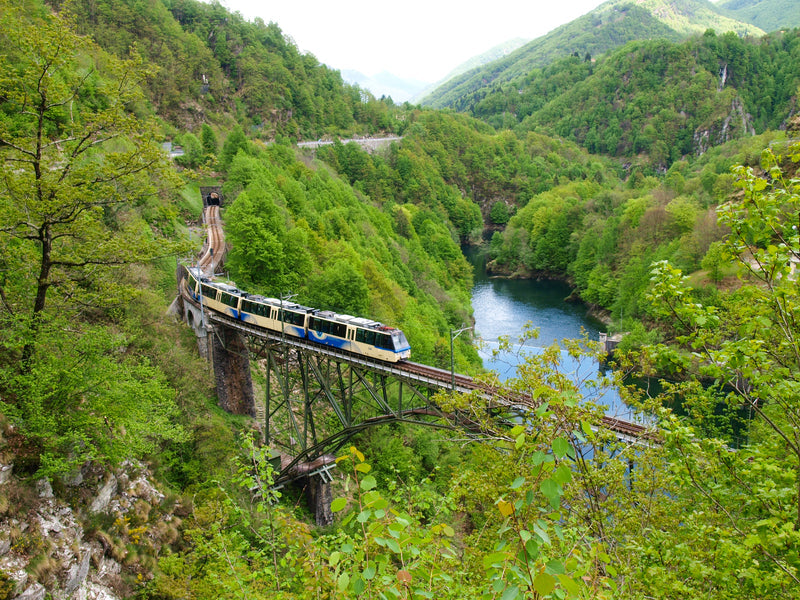
Photo © and courtesy of Leo Express.