Caledonian Sleeper introduces Birmingham International calls to Highland trains
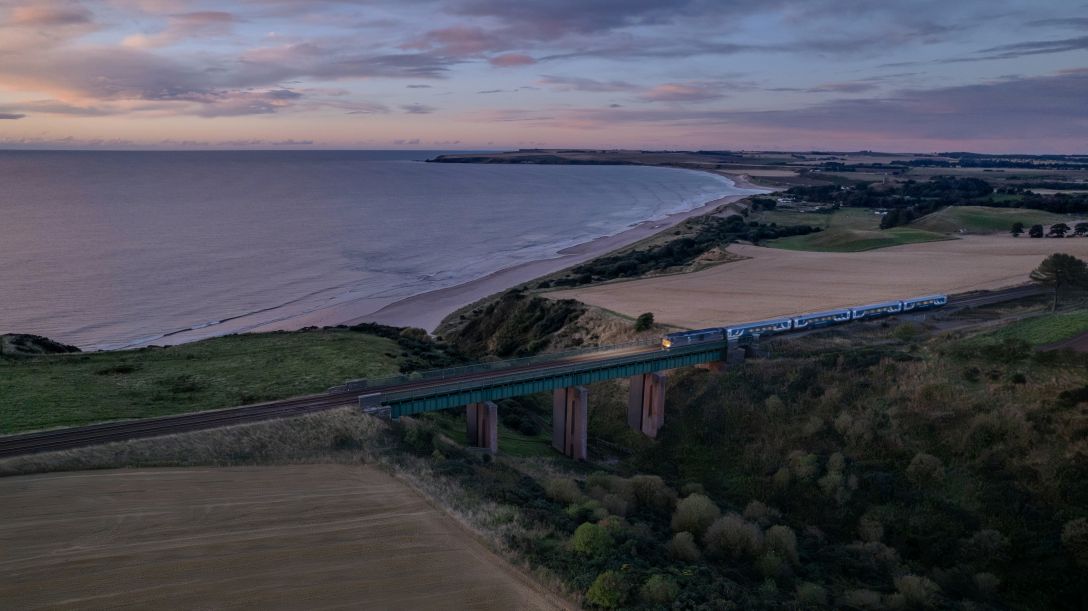
Caledonian Sleeper, the operator of overnight trains between London and destinations across Scotland, has introduced a new call at Birmingham International on its services to and from Aberdeen, Fort William and Inverness. The move has been heralded as the biggest change to the Highland Sleeper for more than thirty years.
The first service to make this additional stop ran on Thursday January 15, and European Rail Timetable General Manager Reuben Turner took a ride to Aberdeen to see why you might – and might not – want to do so too.
Why introduce a Birmingham stop?
The West Midlands, with Birmingham at its heart, has a population of just over three million, making it the United Kingdom’s second most populous region after London. Until now, anyone from the West Midlands wishing to use the Highland Sleeper faced an awkward choice: travel south to London and double back on themselves, or head north to Crewe to board at 2345 and lose a precious hour of rest (and they would, of course, have to go to Crewe…).
For travellers heading in the opposite direction from the Highlands, the logic is even more appealing. Extra time in bed is always welcome, and the later departure that Birmingham International allows is a tangible benefit.
Birmingham International also has another advantage: it sits directly next door to Birmingham Airport.
Birmingham International as a Sleeper station
Anyone familiar with Birmingham International will know that the station itself is not overly blessed with shops and cafés. While there are plenty of options at the nearby NEC and airport, by around 2200 what few facilities exist on the station concourse are firmly shut.
As this was launch night for the new Birmingham call, Avanti West Coast had kindly kept its First Class lounge open later than usual. Unlike at other Sleeper destinations, however, this will not – for now at least – be a regular feature, as the lounge normally closes at 2000.
This raises an obvious question: why Birmingham International rather than the much more central Birmingham New Street? The simple answer is the length of the train. The Highland Sleeper regularly runs at up to sixteen coaches between London and Edinburgh, a formation that would foul key junctions at New Street. Even at Birmingham International, a significant portion of the train sits beyond the end of the platform.
Getting there
From my European Rail Timetable outstation in Peterborough, it would actually have been quicker to travel to London and join the Sleeper there. Instead, I headed to Birmingham in mid‑afternoon on the hourly CrossCountry service and found a pub with reliable wi‑fi in which to compile that week’s Friday Flyer.
As with travelling via London, it would have been entirely possible to do a full day in the office and still reach Birmingham with time to spare, even allowing for the transfer from New Street to International.
The journey itself
At 2115 I checked Real Time Trains to see whether the northbound Sleeper had left London Euston on time. It had not, and despite refreshing the feed several times it appeared to be going nowhere at all. A quick look at the National Rail app revealed that an earlier incident at Watford Junction was causing widespread disruption.
At around 2125 I received a text message from Caledonian Sleeper advising that the train was delayed and that further information would follow. At least I was warm and dry in the London and North Western pub at Birmingham New Street while I waited.
The train eventually departed London around an hour late, at which point I made my way over to Birmingham International on a West Midlands Railway local service. It ran as planned, but the delay did somewhat spoil the send‑off that the Caledonian Sleeper marketing team had arranged. We were, however, still treated to the skirl of bagpipes as the train arrived. The weather did its best to dampen spirits too, with persistent rain and bitter cold throughout the day.
On board
I was welcomed on board by a friendly attendant who showed me to my cabin and explained the breakfast options. These are selected by filling in a card and hanging it on the outside of the cabin door. Access to cabins is via key card.
I was travelling in a Club Solo sleeper, which is single occupancy of a two‑berth cabin with an en‑suite toilet and shower. This ticket also allows priority access to the Club Car, where dinner and drinks are available. Given the late running of the train, however, I opted to skip this and head straight to bed.
The cabin itself is quite compact – noticeably smaller than equivalent accommodation on Nightjet and other continental European sleepers. This is perhaps to be expected given the UK loading gauge, which requires shorter and narrower vehicles. The cabin is permanently arranged in night mode, and in my case the ladder to the upper berth was left in place. This was mildly annoying, although it did at least prevent any risk of falling out of bed.
The bed itself was comfortable, even for someone over six feet tall. Bottles of water were provided, along with a small packet of very tasty Scottish fudge. A sleeping mask and earplugs were also included, and on this inaugural Birmingham International service all passengers received a commemorative certificate.
Sleep (or lack of it)
Although the vehicles in the Caledonian Sleeper fleet are relatively new, they unfortunately ride very poorly. Every switch and crossing was distinctly felt, particularly in cabins close to the bogies, as mine was. The cabins are also surprisingly bright, even with the blinds down and as many lights as possible switched off, and they are undeniably noisy. The eye mask and earplugs are not optional extras.
In total, I managed around four hours of sleep, waking shortly after 0400 as the train’s various portions were shunted at Edinburgh. Thanks to generous padding in the timetable and some slick operating, departure from Edinburgh was achieved just twelve minutes late.
Facilities and breakfast
The shower offered good water pressure, along with complimentary shampoo and body wash, and there was a generous supply of towels. The floor, however, does not drain particularly well and required some mopping up with a towel afterwards.
Breakfast was excellent. I opted for the full Scottish cooked breakfast: bacon, poached egg, portobello mushroom, toasted tattie scone, Puddledub link sausage, The Farmer’s Son haggis, black pudding and lorne sausage. There are plenty of other options available, but on busy services – such as this one – you may be asked to eat in your cabin, which unfortunately does not have a table.
Would I do it again?
For passengers based in the West Midlands, the new Birmingham International call is undeniably useful. It removes the need to trek down to London or make a late‑night dash to Crewe, and in timetable terms it feels like a long‑overdue acknowledgement that not everyone lives south of Watford. If you are already nearby – or connecting from an evening flight into the airport – it makes a great deal of sense.
That said, Birmingham International itself is not an especially welcoming place from which to begin a night train journey. With everything shut by late evening, no regular lounge access and a rather exposed platform environment, it lacks the sense of occasion found at Euston or even at some smaller Sleeper stations. This is not a deal‑breaker, but it is certainly something to be aware of, particularly on cold or wet nights.
On board, the Caledonian Sleeper delivers much of what it promises: a comfortable bed, an excellent breakfast, friendly staff and the undeniable romance of waking up deep in Scotland. However, the combination of poor ride quality, cabin noise and intrusive lighting means that light sleepers may struggle.
Overall, the Birmingham International stop is a welcome and sensible expansion of the Highland Sleeper, even if it will not suit everyone. Used with the right expectations – and a firm resolve to deploy the eye mask and earplugs – it can still be a very civilised way to travel north overnight.
Just don't expect much sleep unless you really can snooze through an earthquake.
Photo courtesy of Caledonian Sleeper.