Europe’s rail network is full of surprises — if you know where to look. Beyond the obvious high-speed corridors and headline services lie rare, quirky, and sometimes overlooked connections that can transform a journey into an adventure. From once-a-day long-distance trains to seasonal extensions, through carriages that quietly cross borders, and narrow-gauge lines serving regional communities, the continent’s railways hold many hidden gems.
Here are a few examples of commercial narrow-gauge railways in Europe that continue to operate today, providing essential links and revealing a side of the network that many travellers might not expect.
Spain: Euskotren and FGC
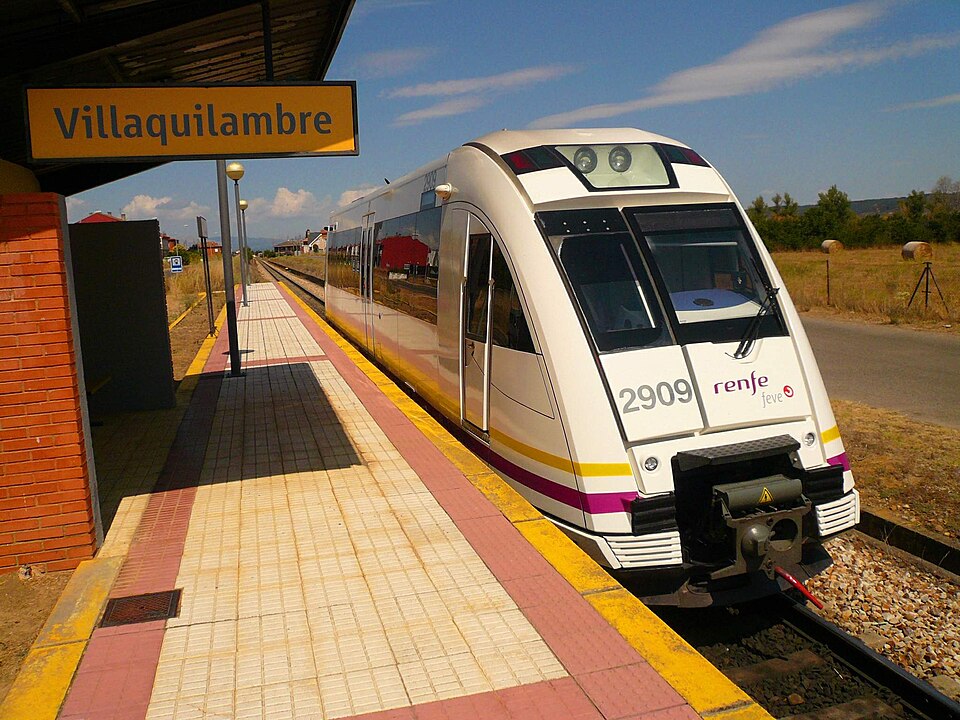
In northern Spain, two narrow-gauge networks provide practical, day-to-day regional services. The Euskotren network links San Sebastián with Irun and Hendaye on metre-gauge track (ERT Table 689a). Trains run every 30 minutes, covering the 22 km journey from San Sebastián to Hendaye in around 37 minutes. Although a standard-gauge line physically connects Hendaye and Irun, there are currently no regular passenger services scheduled, making Euskotren the main rail option for cross-border travel. The stations are close to the SNCF and RENFE mainline stations, but travellers should allow a little time to walk between them.
Further south, the Ferrocarrils de la Generalitat de Catalunya (FGC) operates several metre-gauge lines radiating from Barcelona, serving towns such as Manresa and Sabadell. These lines run frequent scheduled services throughout the day, linking communities with the city and offering connections to other regional services.
Both networks demonstrate how narrow-gauge railways in Europe can remain commercially viable when they meet genuine transport needs, highlighting the continued role of metre-gauge lines in connecting towns and cities where alternative rail options are limited.
Switzerland: Narrow-Gauge Networks
Switzerland is home to several narrow-gauge railways that remain important for everyday travel, alongside their more famous scenic offerings. Many of these lines are electrified and integrated into regional transport networks, serving towns and communities in mountainous areas.
The Rhaetian Railway (RhB) in Graubünden operates both the famous Bernina and Albula routes and essential local services connecting Chur, St. Moritz, and Pontresina (ERT Table 545). Similarly, the Montreux–Oberland Bernois (MOB) line links mountain communities with larger towns, running regional trains alongside the panoramic tourist services (ERT Table 566). The Matterhorn Gotthard Bahn (MGB) provides connections across the Alps, combining practical travel with scenic sections (ERT Table 576).
Sweden: Roslagsbanan
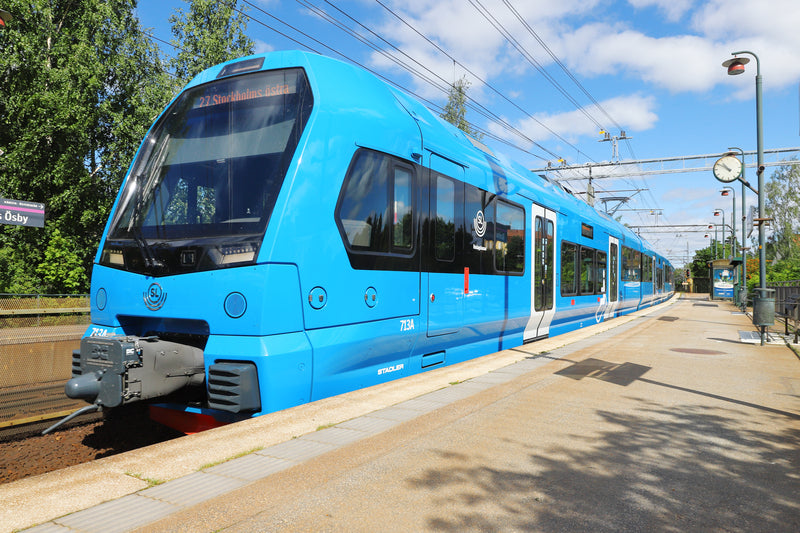
Just north of Stockholm lies one of Europe’s most unusual surviving narrow-gauge networks: the Roslagsbanan. Operating on 891 mm gauge, this network consists of several interconnected lines radiating from Stockholm Östra and serving suburbs and towns in the Roslagen region. Although it is not included in the European Rail Timetable — because it offers purely local services — the Roslagsbanan carries an important day-to-day role within the Stockholm transport system.
The network runs frequent trains throughout the day, with multiple departures each hour on core sections, and continues to outer termini such as Näsbypark, Täby kyrkby, and Österskär. These frequent services form the backbone of rail travel in the region, linking residential areas with the capital’s rapid transit and mainline services.
The Roslagsbanan demonstrates that narrow-gauge railways in Europe are not confined to heritage or scenic lines. In some cities and regions, they remain practical, fully integrated parts of the transport network.
France: Chemins de Fer de la Corse
Corsica retains a small network of metre-gauge railways operated by the Chemins de Fer de la Corse (CFC), connecting Ajaccio, Bastia, and Calvi (ERT Table 369). These lines provide regional services on a limited timetable, linking the main coastal towns and smaller communities along the island’s mountainous interior.
Although the routes are scenic and attract some visitors, the network’s primary role remains practical regional transport, connecting settlements that would otherwise be difficult to reach by road. Trains run infrequently, so travellers need to consult the timetable carefully to plan journeys and connections.
Corsica’s network demonstrates that narrow-gauge railways can survive in Europe when they meet genuine local transport needs, even if services are sparse and tailored to specific travel patterns.
Bulgaria: Septemvri–Dobrinishte
Bulgaria’s Septemvri–Dobrinishte line (ERT Table 1510) runs on 760 mm gauge through the Rhodope Mountains, linking the mainline station at Septemvri with the mountain resort of Dobrinishte. The route is renowned for its dramatic scenery, steep gradients, and engineering feats such as tight curves and viaducts.
Services are limited to just four daily journeys in each direction, providing essential regional transport along this otherwise remote corridor. The line carries both local travellers and visitors drawn to its scenic reputation, demonstrating how narrow-gauge railways can remain relevant in areas where geography and demand make standard-gauge lines impractical.
The Septemvri–Dobrinishte line is a striking example of a working narrow-gauge railway that combines operational utility with memorable landscapes, showing that functional lines can also offer remarkable journeys.
Image: Modern class X15p narrow gauge train at Djursholms Osby station on the Roslagsbanan. ID 328399229 © Roland Magnusson. Dreamstime.com