“Daddy look! Ice cream. Can I have one?”. Having trekked across Berlin to the Wuhlheide, a huge park in the east of the city rarely visited by tourists, I was disappointed to hear that my train-obsessed son was more interested in the mass produced ice cream than the railway platform we were standing on.
As we bought our tickets and went out to look for the incoming train, his attention picked up though. “Daddy, where does this train go? To Potsdam?”.
“Not quite” came by sheepish answer “it goes around the park to the stadium, an S-Bahn station and a stop in the “forest””.
“S-Bahn station? Cool!”
My East Berliner wife had suggested this as a day out with the kids. A bit of googling later and I was both convinced it would be a hit and was very intrigued myself. The Parkeisenbahn Wühlheide (“Park Railway Wuhlheide”) is a project where children (mostly between the ages 12-16 and under supervision (!)) run a small railway’s operations. From ticket sales to on board conductors, platform duties and signalling, they are in charge of virtually every element. The train driving itself is however mainly done by volunteer adults.
On the day we went in the spring of this year, I overheard two of the conductors sitting in the open carriage next to us in a conversation which could just as well have taken place on an ICE train between a couple of DB staff.
“What time do you knock off?”
“3pm - it is a long shift today but I prefer the early ones”
“Me too. I get home at a reasonable hour”
The DB connection is real. Germany’s main rail operator (alongside a host of others including S-Bahn Berlin) are supporters of the railway and today it fits into Germany’s national timetable with a proper connection to the rest of the network at S-Bahnhof Wuhlheide. On top of that it runs special seasonal trains for Halloween and Christmas, and it can even be booked for private events.
Its history though is what really piqued my interest. When I was there earlier this year, it was gearing up to celebrate its 70th anniversary. When it was founded in 1956, it was the latest in what became a reasonably large network of Pioniereisenbahnen ("Pioneer Railways") run by members of the Young Pioneers, East Germany’s equivalent of the scouts - with the slight difference that membership was almost universal and opting out was considered quite a bold political statement.
In what seems like crazy amounts of publicity for a small, narrow gauge amusement railway, its construction was announced to coincide with Wilhelm Pieck’s (the East German president’s) 70th birthday, and the country’s transport minister opened the not quite seven kilometres of track a few months later (it was later expanded to take in the S-Bahn station meaning that today it has a total track length of 7.5 km even if it is rare for them to use the whole extent of this). Deutsche Reichsbahn - the East German rail company kept the old name from before the War - gave the pioneers uniforms and later took over the running of the railway entirely, seeing it as an opportunity to train the next generation of railway workers.
In total, there were 16 of these pioneer railways in East Germany although the others were never assimilated into the national network in the same way. Beginning in the 1950s when much of East Germany still lay in ruins, they were a conscious attempt to show the modernity of the GDR. Indeed they did not - on the whole - opt to use old rolling stock as many similar but more nostalgic narrow gauge railways around the world were doing at the time. Instead, they opted for modern, diesel engines as part of the mission of showing that these railways were forward thinking, youth orientated entities.
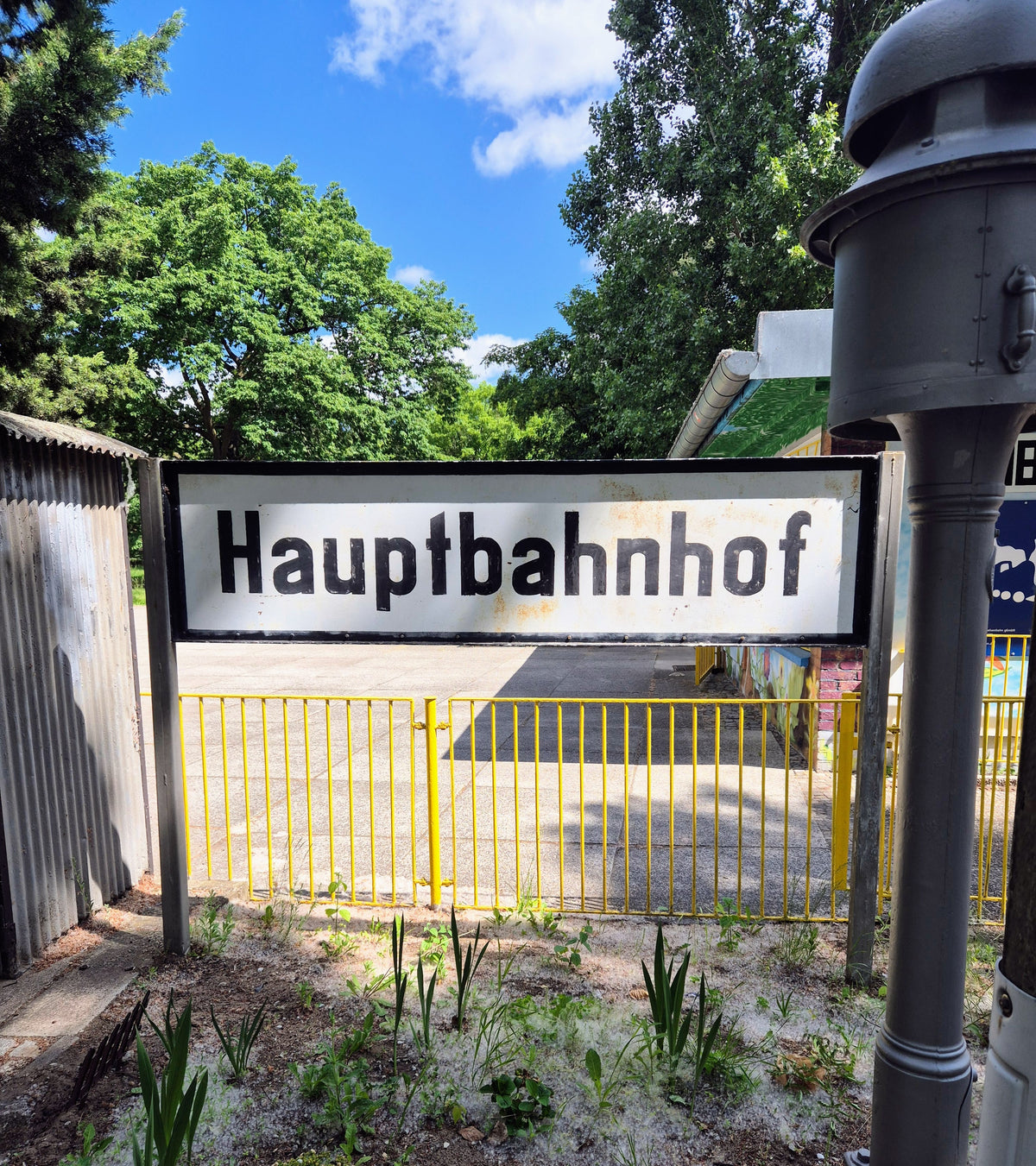
Perhaps more remarkably than their creation is that the vast majority of these Pioneer Railways still exist. They have all changed their names and some like Wuhlheide have taken significant steps to remove reference to their communist pasts. All references to the pioneers were removed with the railway itself becoming the Parkeisenbahn. And in some cases, there were further changes - the station now boringly called “Hauptbahnhof” was previously known as “Pioneer Park Ernst Thälmann”.
In a reunified Germany where not much is left from the GDR period, the pioneer railways are something of an exception. Although the kind of status where national ministers would come to their openings and are instead now mostly run by passionate enthusiasts as opposed to local governments, they still mostly operate. In some cases this is pretty sporadic, but some like the one in the Wuhlheide are properly functioning railways still - in the 21st century sticking - to a model partially developed by a communist state.
So what is it like to ride? For a journey of just over 7km, it is surprisingly diverse. Parts of the railway run through the park’s wooded areas where chalet-style wooden huts sell Bratwurst and chips. Another stretch runs perilously close to the pedestrian path and through a narrow tunnel to the S-Bahn station. The final one for most of its journeys takes in a stadium now used by Union Berlin’s reserve and second teams (and other local clubs). The young conductor on the train told me that when there are games a few fans actually use the Parkeisenbahn to get from the S-Bahn to the stadium - indeed the trains only stop there on request, a sign that this not merely a recreational railway.
It is however mostly built for teenagers to work on and kids to enjoy. The review that matters most is therefore that of my 3-year-old (the 1 year-old was a touch too young to deliver a succinct verdict). The ride may have been on the longer end for someone of his attention span - after the euphoria of the first 5-10 minutes, he definitely began to flag. That said, as we came to the end he was extremely reluctant to get off. Until he saw that ice cream sign again, “Daddy, now can I have an ice cream??”.
For adults, the pleasure is more in the railway's fascinating history - built for children to run it but tightly locked into both the nascent state's institutions and its propaganda machine. I would hazard a guess that it is one of very few narrow gauge tourist railways in Europe whose construction was announced to coincide with the birthday of a head of state. For people not from East Germany, it helps to serve as a useful reminder that alongside the brutal surveillance state the GDR government did do good things. Although not much from East Germany has survived to the modern reunified state, the Pioneer Railways mostly have - a sign that their legacy was positive and durable enough to survive huge political upheavals.
We will be back for its Santa rides this Christmas - possibly not a part of its operations the atheist East German government would have been keen on - but one that brings in huge crowds of Berliners (still mostly from the East) today. This is an East German relic which looks set to last.
-
The Parkeisenbahn Wuhlheide’s timetable can be found here. It operates most weekends with a break during the depths of winter. In summer, there are also normally rides during the week too. nhttps://www.parkeisenbahn.de/fahrplanfahrpreise.html
- In general tickets can only be bought in cash and at the ticket office (or from a conductor on the trains). You can reserve for the special Easter and Christmas services but this typically involves making a German bank transfer
-
There are still other operational former Pioneer Railways in East Germany in cities including Chemnitz, Dresden, Gera, Leipzig and Görlitz. Berlin’s is the largest and most active. All of them operate seasonal schedules