SBB Track Renewal to Disrupt Basel–Olten Rail Services This Summer
Major engineering works in one of Switzerland’s busiest railway tunnels are set to cause significant timetable changes for passengers travelling between Basel and Olten over the coming weeks.
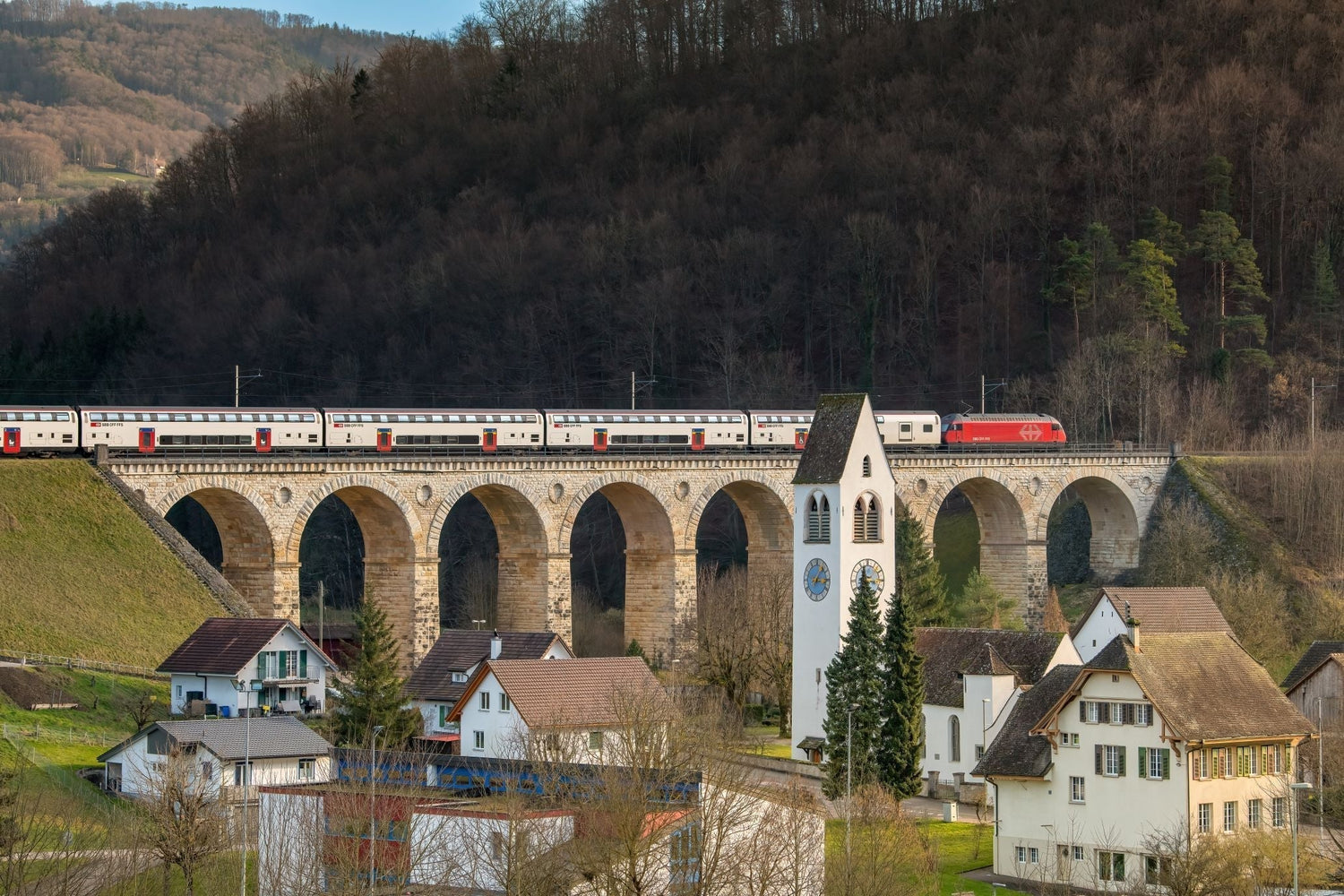
Swiss Federal Railways, SBB, has begun a major track renewal project in the Hauenstein Base Tunnel, requiring the closure of one of the tunnel’s two tracks from June 1 until July 27.
The tunnel forms part of the busy Basel–Olten main line, one of Switzerland’s most important corridors for both passenger and freight traffic. During the closure, trains will continue to use the remaining track, although reduced speeds and capacity restrictions will affect services throughout the route.
Several long-distance trains between Basel and Olten will be cancelled, while others will be diverted via Läufelfingen or Frick. As a result, journey times on some services will be extended.
Regional services will also be affected. The S3 S-Bahn route between Olten, Basel and Laufen will continue to operate every 30 minutes, although some trains towards Olten will run at slightly altered times. Meanwhile, the S9 service between Olten, Läufelfingen and Sissach will be suspended throughout the works, with replacement buses operating every half hour.
Freight traffic will also be diverted via the older Hauenstein route through Läufelfingen. SBB has warned residents along the line that some freight trains may be louder than the S-Bahn services they normally see.
The closure forms part of a comprehensive modernisation programme that began in 2023 and is scheduled to continue until 2028. In addition to replacing tracks, SBB is renewing tunnel infrastructure, installing new cables, upgrading drainage systems and improving emergency evacuation facilities.
Passengers are being advised to check journey details before travelling, as online timetables and the SBB Mobile app have been updated to reflect the temporary changes.
Photo Copyright Urs Plattner, SBB AG.
GoVolta Opens Ticket Sales for Amsterdam–Paris Service
Dutch open-access rail operator GoVolta has opened ticket sales for its new Amsterdam–Paris service, which is due to launch on December 14, 2026.
The daily train will connect Amsterdam Centraal and Paris Nord in just over seven hours, calling at Haarlem, Den Haag HS, Rotterdam Centraal, Lage Zwaluwe, Roosendaal, Antwerpen Centraal, Gent-Sint-Pieters, Arras and Longueau (Amiens).
Fares start from €19 between the Netherlands and France, while journeys involving Belgium are available from €10. To encourage early bookings, GoVolta is offering its flexible date-change option for €1 for a limited period, allowing passengers to change their travel date free of charge up to 14 days before departure. The option will normally cost €19.
GoVolta says its decision to serve Gent rather than Brussels was deliberate, noting that the Belgian capital already enjoys extensive international rail links while Gent currently lacks direct services to either Amsterdam or Paris. The operator believes the choice will help open up new travel opportunities while also slightly reducing journey times.
The service will also restore a direct international rail connection for Den Haag HS, which lost direct Paris services when Thalys progressively withdrew from the city in favour of Rotterdam.
Each train will comprise eleven vehicles: nine Economy-class coaches, one Comfort-class coach and a restaurant car branded as the GoVolta Lounge. The refurbished Belgian-built i10 coaches will provide capacity for up to 840 passengers, with every traveller receiving a reserved seat. Passengers will also be able to pre-book meals and make use of the onboard dining facilities during the journey.
According to co-founder and Commercial Director Hessel Winkelman, the new service is intended to make international rail travel accessible to a wider range of passengers, including those living in smaller towns and rural areas that are often bypassed by high-speed services.
The operator says developing the Amsterdam–Paris route required close cooperation with infrastructure managers ProRail, Infrabel and SNCF Réseau. Looking ahead, GoVolta has already submitted timetable requests for 2028 and hopes to reduce journey times, add a stop in the Lille area and eventually operate two daily return services.
Meanwhile, GoVolta's Amsterdam–Berlin service continues to expand. Having launched in March 2026, the route will increase to six departures per week from July 1 and daily operation from December 13.
The operator also expects to benefit from planned engineering works on Germany's Hannover–Berlin high-speed line between October 2026 and December 2027. While ICE services operated by Deutsche Bahn and NS will be diverted via Hamburg, GoVolta has secured a route via Braunschweig and Magdeburg, allowing additional stops and an expected journey time of under eight hours. The diversion will also enable the operator to serve Hilversum and Apeldoorn in the Netherlands.
Separately, GoVolta has launched a €1.5 million bond offering to support future expansion.
Florina Trains Return as Hellenic Train Restores Western Macedonia Rail Link
Rail services between Thessaloniki and Florina have resumed following the restoration of the route by Greek operator Hellenic Train, marking the return of direct passenger trains to the western Macedonian city after a period of replacement bus operation.
The restored service began on May 30, with two daily return journeys operating between Thessaloniki and Florina via Edessa. Trains call at a number of intermediate stations including Sindos, Adendro, Platy, Alexandria, Veria, Naoussa, Skydra, Arnissa and Amyntaio.
Southbound services from Florina depart at 06:45 and 14:15, arriving in Thessaloniki at 09:49 and 17:21 respectively. Northbound departures leave Thessaloniki at 10:40 and 13:55, reaching Florina at 13:44 and 17:01.
As part of the timetable changes, local services between Thessaloniki and Edessa have been retimed. Train 1735 now departs Thessaloniki at 18:30 and arrives in Edessa at 20:12, while train 1736 leaves Edessa at 20:45 and reaches Thessaloniki at 22:27.
Hellenic Train noted that the first southbound departure from Florina on May 30 was operated by bus, but all services have run by rail since May 31. The temporary replacement bus service that had been operating between Edessa and Florina has now been withdrawn.
The operator said the reinstatement of trains to Florina will strengthen regional connectivity and support more sustainable travel options in northern Greece. The move also restores direct rail access to one of the country's most north-westerly cities, improving links with Thessaloniki, Greece's second-largest urban centre.
Hellenic Train said it remains committed to improving its railway services and enhancing the passenger experience across the Greek network.
Trenitalia to Launch Direct Lecce–Naples Frecciarossa
Italy's high-speed rail network will take another step forward this summer with the introduction of the first direct Frecciarossa service linking Lecce, Bari and Napoli.
The new Trenitalia-operated connection will begin on July 1, providing, for the first time, a through high-speed service between Puglia and Campania without the need to change trains. Tickets for the route are already on sale.
The inaugural journey will depart Lecce at 18:10 on July 1. The first northbound departure from Napoli Centrale will follow the next morning, leaving at 06:45 on July 2.
The new service will call at Lecce, Brindisi, Bari Centrale, Barletta, Foggia, Benevento, Napoli Afragola and Napoli Centrale, directly linking several of southern Italy's most important cities. The train is expected to appeal to both business and leisure travellers, while strengthening rail connectivity across the Mezzogiorno.
According to Trenitalia, journey times will be around three and a half hours between Bari and Napoli, and approximately five hours between Lecce and Napoli. These timings have been made possible in part by the opening of new railway infrastructure between Napoli and Cancello, which is helping to improve access to the Neapolitan rail hub.
The launch is also being viewed as an early benefit of the wider transformation taking place along the Napoli–Bari corridor. Work continues on the new high-speed/high-capacity line between Campania and Puglia, a major infrastructure project that is expected to deliver substantially faster journey times once completed.
Until then, the new direct Frecciarossa represents a significant enhancement to rail travel in southern Italy, expanding the reach of Italy's flagship high-speed network and making journeys between the Adriatic and Tyrrhenian coasts simpler than ever.