For many years, airport railway stations were regarded as useful but secondary additions to airports — convenient for some passengers, but hardly central to the aviation industry itself. Recent developments at Heathrow and München suggest that attitude is rapidly becoming outdated. Increasingly, airport rail links are emerging as one of the most important elements of modern airport infrastructure.
There is currently a debate unfolding around the future of the Heathrow Express. It illustrates this shift perfectly. When the service was launched in 1998, it represented a bold and ambitious idea: a premium non-stop train connecting Heathrow Airport with central London in just 15 minutes, with even a check-in facility at Paddington station. At the time, it symbolised speed, modernity and convenience. Business travellers in particular embraced the service, despite its very high fares.
Today, however, the Heathrow Express faces a challenge from a very different type of railway service. The Elizabeth Line, opened in 2022, may take slightly longer between Heathrow and Paddington, but it offers something passengers increasingly value more highly than speed alone: connectivity. Rather than simply delivering travellers to one London terminus, the Elizabeth Line provides direct access across central London, as well as connections to the Underground.
This has changed passenger behaviour dramatically. Heathrow Express profits have fallen sharply since the Elizabeth Line opened, even though Heathrow insists that passenger satisfaction with the premium service remains extremely high. The problem is not that Heathrow Express is a bad service. On the contrary, it remains fast, comfortable and well suited to airport passengers, with luggage space and airline-style presentation. Rather, the issue is that integrated transport networks increasingly matter more than isolated premium links.
The Heathrow case also highlights another important reality: airport railway stations are no longer just about airport passengers. They are increasingly part of wider urban and regional transport systems. An airport rail station that functions only as a shuttle terminus may no longer represent the best use of scarce railway capacity. Transport for London’s suggestion that Elizabeth Line services could eventually replace Heathrow Express reflects a broader policy goal of moving larger numbers of people more efficiently across the entire city.
Meanwhile, developments in Germany demonstrate a different but equally important aspect of airport rail integration. München Airport has long suffered from the absence of a direct long-distance rail connection, especially when compared with Frankfurt Airport, whose ICE station has become one of Europe’s great multimodal transport hubs. For decades, travellers arriving at München by long-distance train have faced an additional transfer onto the S-Bahn for the final leg to the airport.
Now Deutsche Bahn is reportedly considering extending ICE services directly to München Airport using existing S-Bahn infrastructure. Although operational challenges remain, the significance of the proposal is considerable. For the first time, passengers from cities such as Stuttgart, Salzburg or parts of Switzerland could potentially travel directly to München Airport by high-speed train without changing trains.
This matters because airport railway stations increasingly influence the competitive position of airports themselves. Airports are no longer simply local facilities serving their immediate metropolitan areas. Modern hub airports draw passengers from vast regions, and rail connections effectively expand an airport’s catchment area without requiring additional domestic flights.
That last point is especially important in an era of environmental scrutiny. Across Europe, governments and airlines face growing pressure to reduce short-haul feeder flights where rail alternatives are viable. Well-designed airport rail stations allow passengers to travel longer distances by train while still accessing international flight networks efficiently. Frankfurt Airport and Zürich Airport have already demonstrated how successful this model can become, with Lufthansa Group’s AIRail services integrating high-speed rail directly into airline booking systems.
There is also an economic dimension that is often overlooked. Efficient rail access improves airport resilience by reducing dependence on congested roads and expensive parking infrastructure. It benefits airport employees as well as passengers, providing reliable transport for thousands of workers who travel to airports every day. It can also influence investment decisions by businesses that increasingly value sustainable and well-connected transport infrastructure.
Perhaps most importantly, airport railway stations shape perceptions. Airports connected seamlessly to urban metro and national rail networks feel integrated into the life of a country. Airports accessible only by motorway can feel isolated and inefficient by comparison.
The stories unfolding at Heathrow and München therefore represent more than local transport debates. Together, they point towards a broader transformation in how airports are planned and understood. Airport railway stations are no longer peripheral conveniences or prestige projects. They are becoming strategic infrastructure at the heart of modern mobility systems.
As airports continue to grow while environmental and capacity pressures intensify, the importance of rail integration is only likely to increase. Far from being an optional extra, integrated rail access may become one of the defining features of the successful airport of the future.
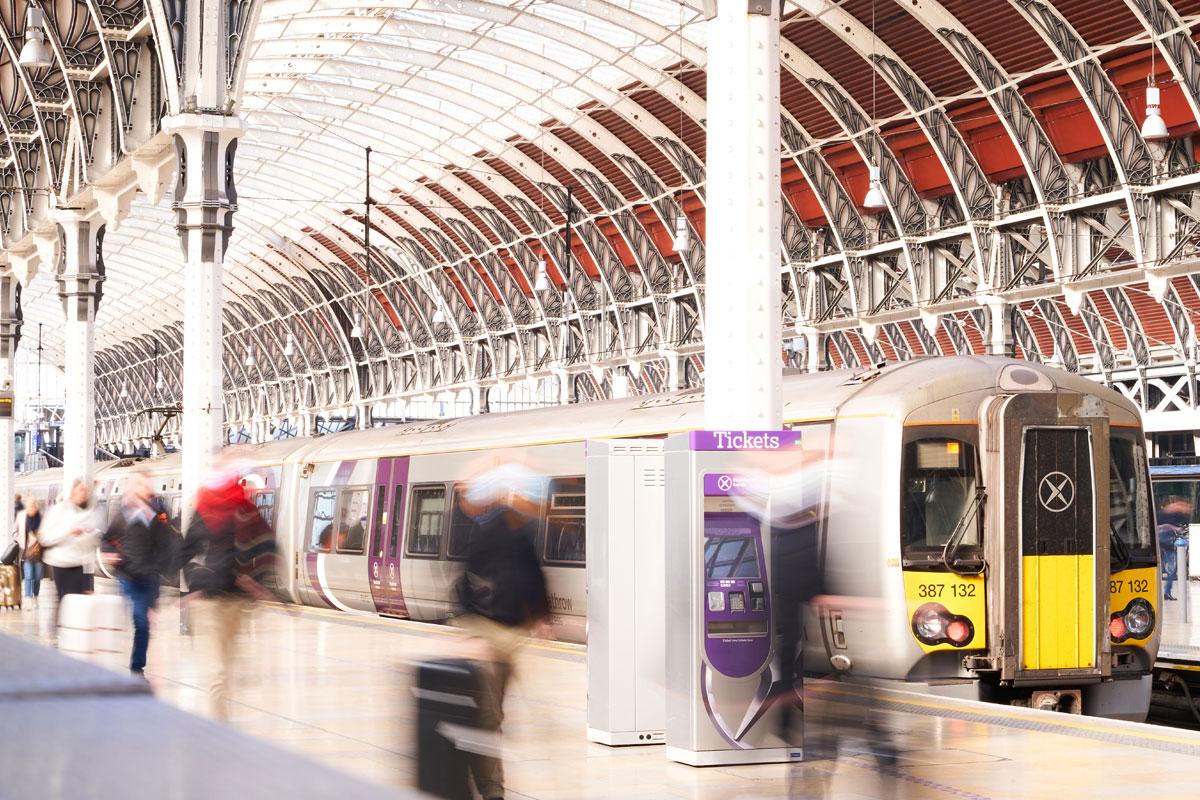
Image courtesy of Heathrow Express.