Modern rail travel is wonderfully efficient. High-speed lines whisk travellers across Europe at remarkable speeds, shrinking journey times between major cities. Yet for those wishing to travel at a slower pace, the timetable often presents possibilities for a rail detour — choosing a slightly longer route to turn a routine trip into a memorable experience.
The European Rail Timetable makes these alternative routes surprisingly easy to discover. A careful glance at nearby tables often reveals alternative routes that follow rivers, climb mountains, or pass through regions you might otherwise miss entirely.
Here are a few examples where a modest change in routing can transform a journey.
Paris to Milan via the Alps
The quickest route between Paris and Milan operates via the French high-speed network by TGV or Frecciarossa (Table 44) with a journey time of around seven hours.
For travellers with more time, a scenic detour through Switzerland and the Alps offers unforgettable scenery:
- Paris – Zurich → ERT Table 40
- Zurich – Locarno (Gotthard line) → ERT Table 547
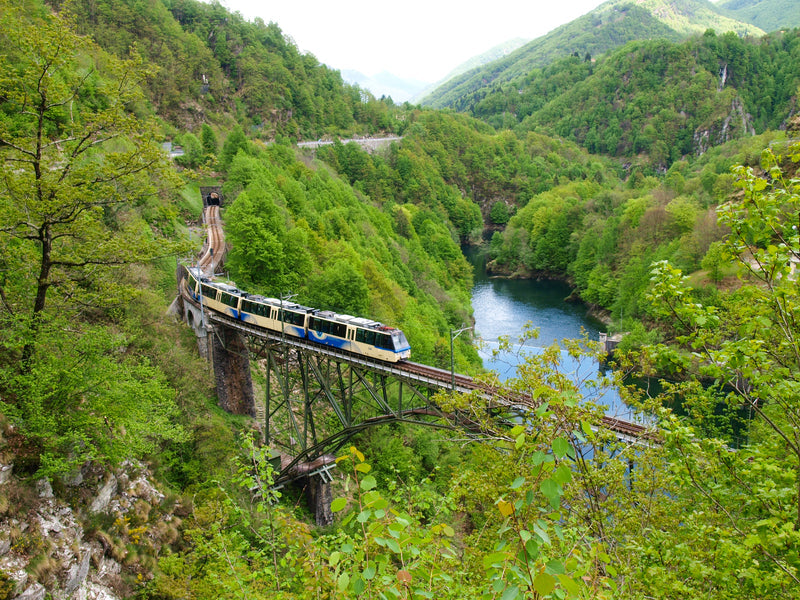
- Locarno – Domodossola (Centovalli Railway) → ERT Table 551
- Domodossola – Milan → ERT Table 590
This classic Alpine route loops through valleys and spiral tunnels, climbing high into the mountains before descending into Ticino. Around the village of Wassen, passengers famously glimpse the same church several times as the train circles upwards — a journey much slower than the high-speed route, but far more memorable.
Paris to Barcelona via the Pyrenees
High-speed TGVs link Paris and Barcelona directly in around seven hours:
- Paris – Barcelona by TGV → ERT Table 13
For a scenic detour through the Pyrenees, there are two options:
Option 1: via Toulouse and Latour de Carol
- Paris – Toulouse → ERT Table 310
- Toulouse – Latour de Carol → ERT Table 312
- Latour de Carol – Barcelona → ERT Table 656
Option 2: via the Petit Train Jaune
- Paris – Perpignan by TGV → ERT Table 355
- Perpignan – Villefranche by local train → ERT Table 354
- Villefranche – Latour de Carol by the Petit Train Jaune → ERT Table 354
- Latour de Carol – Barcelona → ERT Table 656
The Pyrenean detours offer dramatic mountain views, viaducts, and high plateaux. While slower than the direct TGV, these routes turn a routine international journey into a memorable adventure.
London to Glasgow via a Settle–Carlisle scenic detour
The fastest route between London and Glasgow is the direct West Coast Main Line with Avanti West Coast services:
- London – Glasgow by Avanti West Coast → ERT Table 154
For a classic British detour, take the Settle–Carlisle Line:
- London – Leeds → ERT Table 179
- Leeds – Settle – Carlisle → ERT Table 174
- Carlisle – Gretna Green – Dumfries – Kilmarnock – Glasgow → ERT Table 213
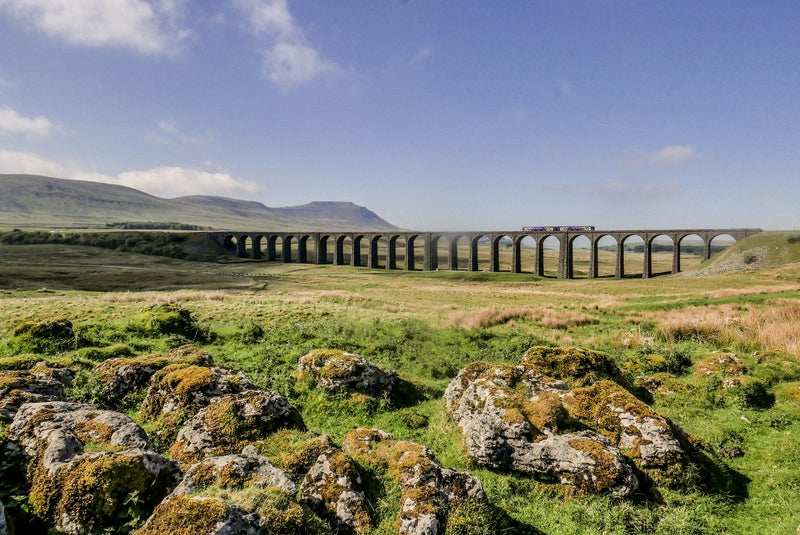
Opened in 1876, the Settle–Carlisle Line winds through the Yorkshire Dales and North Pennines, crossing the iconic Ribblehead Viaduct and passing limestone fells, deep valleys, and historic towns. Continuing north via Dumfries and Kilmarnock through the Scottish Lowlands, the journey offers stunning scenery and the opportunity to discover a less well-known area of the country — all while taking a little longer than the direct line.
Berlin to the Baltic coast: lagoons and sandy beaches
Not all detours involve mountains. Sometimes the reward lies in quiet coastal landscapes:
- Berlin – Pasewalk → ERT Table 845
- Pasewalk – Szczecin → ERT Table 836
- Szczecin – Świnoujście → ERT Table 1010
This regional route follows lagoons, estuaries, and coastal flats before reaching the wide sandy beaches of north-western Poland. It is peaceful and understated, perfect for travellers who enjoy quiet, scenic journeys off the main corridors.
Why detours matter
Choosing a detour is about more than scenery. It changes the rhythm of travel.
High-speed lines prioritise efficiency; scenic routes follow geography — rivers rather than tunnels, valleys rather than straight lines. They pass through towns where trains still feel part of everyday life rather than simply a means of getting somewhere else.
For timetable explorers, these routes encourage a different approach to planning. Instead of searching only for the fastest option, travellers can ask:
What lies between the main lines?
Often the answer is a railway that turns the journey itself into the highlight.
A tip for timetable explorers
When planning your next trip, try browsing a few pages either side of your intended route in the European Rail Timetable. Our individual country maps within the timetable or consulting a copy of our Rail Map Europe may also inspire you to take alternative routes. You may find a secondary line linking two regions you had not considered, or a mountain railway offering a spectacular alternative to a high-speed corridor.
Buy the Spring 2026 edition of the European Rail Timetable here.
Photo: Ribblehead Viaduct. ID 125690063. © Trainman2010. Dreamstime.com.