Nine-month closure between Alphen aan den Rijn and Bodegraven
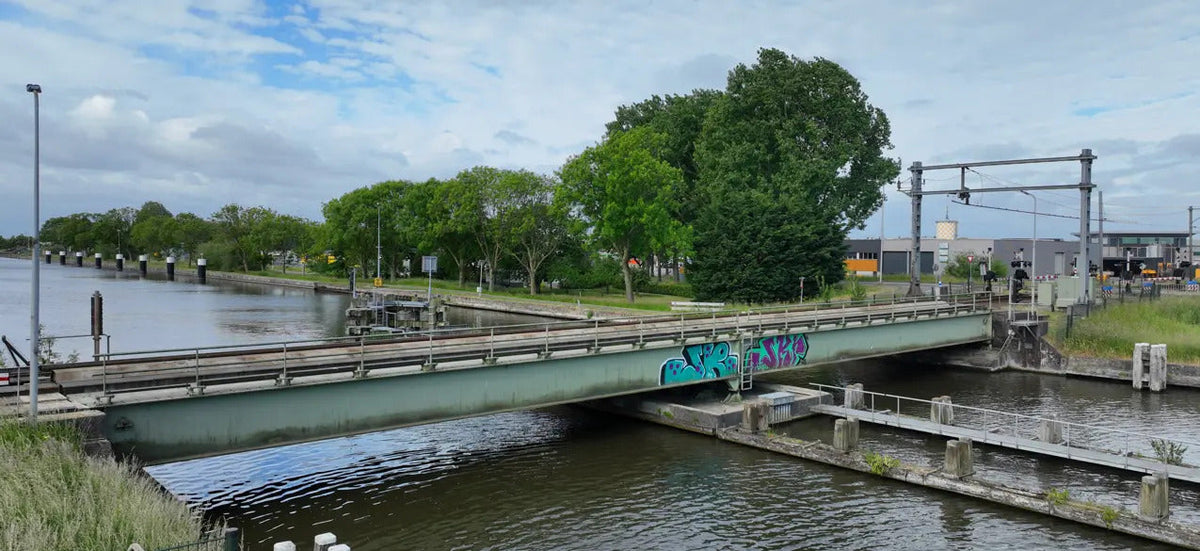
The railway between Alphen aan den Rijn and Bodegraven will close for nine months from October 12, 2026, to July 13, 2027, while ProRail replaces the Gouwe railway bridge. No trains will run between the two stations during the work, with replacement buses operating four times an hour.
There will also be changes to the train service in ERT Table 459. The Leiden Centraal–Alphen aan den Rijn service will run four times an hour throughout the day on Mondays to Fridays, rather than twice an hour outside peak periods. Passengers travelling between Leiden and Utrecht are advised to travel via Schiphol Airport and Amsterdam Zuid, adding around ten minutes to the journey.
Passengers travelling between Alphen aan den Rijn and Gouda are warned to expect additional crowding, particularly between Waddinxveen and Gouda during the Tuesday and Thursday peaks.
The Gouwe bridge is nearing the end of its life. ProRail will replace its supports and central pillar and renovate and reuse the movable section. The work is intended to reduce the risk of future disruption and keep the bridge available for both trains and boats for decades to come.
Renfe to launch new ticket sales system
Renfe is replacing its long-standing ticket sales system with a new platform designed to make buying tickets and managing bookings easier. The new system will begin operating on October 28, initially handling bookings for journeys from January 25, 2027. Renfe will run the existing and new systems alongside each other during the transition, with the new system becoming fully operational on January 25.
The new platform will bring together sales through Renfe's website, app, ticket offices, ticket machines, travel agencies, telephone sales and onboard sales. It is intended to make it easier to compare trains and fares, with information on prices, journey times, available places and the conditions attached to each fare displayed together. Passengers will also be able to manage changes, name corrections, invoices and compensation claims through the same system, while options such as travelling with bicycles or pets will be integrated into the booking process.
The project represents a major overhaul of Renfe's underlying sales technology rather than simply a redesign of its website. Renfe says the new system has been developed with extensive testing involving passengers and staff.
There has, however, been almost as much discussion of the new logo as the new ticketing system. Renfe has revived its historic circular symbol, known in Spain as the galleta (biscuit or cookie), which it used until 2005. The company's launch campaign even asks, “¿Aceptas cookies?”
The new system is being introduced under the banner Nueva Renfe, with the company describing the October launch as a marcha en blanco — the railway term for running trains under real operating conditions before the public opening. It says the system will continue to be developed after the full launch, with further features planned for the Renfe app.
OUIGO adds fourth Brussels–Paris round trip
OUIGO will introduce a fourth round trip between Brussels and Paris from December 13, adding extra capacity to a service that has proved increasingly popular since its launch in December 2024.
The additional train will run on Fridays, Saturdays and Sundays, leaving Brussels towards the end of the morning and returning from Paris in the afternoon. The existing three round trips operate at morning, midday and evening times, giving the service a more evenly spaced offering at key times of day.
The OUIGO Classic trains take around three hours between Brussels-Midi and Paris, with a stop at Mons and, on one round trip each day, at Aulnoye-Aymeries and Saint-Quentin. Fares between Brussels and Paris range from €10 to €59 one way, with children's fares capped at €8.
OUIGO Classic may not be everyone's preferred way of crossing the border, but the addition of another round trip suggests there is a market for slower, lower-cost international trains. The timing is particularly interesting: from December 14, Dutch open-access operator GoVolta will also begin a daily Amsterdam–Paris service using conventional trains. The journey will take a little over seven hours but will serve Antwerpen-Centraal and Gent-Sint-Pieters as well as several stations in the Netherlands and France.
The OUIGO service is operated by SNCB and SNCF Voyageurs, while GoVolta is an independent open-access operator. Together, the two services will offer an alternative to the faster but generally more expensive high-speed trains, with GoVolta in particular opening up direct Amsterdam–Paris journeys to two Belgian cities that are bypassed by the high-speed route.
SNCB and SNCF Voyageurs say the OUIGO service has been particularly successful during long weekends, school holidays and the end-of-year period. Tickets for the additional trains went on sale on September 30.
The Summer 2026 edition of the European Rail Timetable is available in print and digital formats and is the perfect partner to our Rail Map Europe.
Image: Gouwe railway bridge at Alphen aan den Rijn. Courtesy of ProRail.