Jacobite Steam Train Returns for 2026 Season After Safety Uncertainty
The Jacobite steam train has returned for the 2026 season, ending months of uncertainty over the future of one of Britain's best-known heritage rail services.
Operated by West Coast Railways, the seasonal train runs over the spectacular West Highland Line between Fort William and Mallaig, a route frequently described as one of the world's greatest railway journeys. The service had faced an uncertain future following a long-running dispute over safety requirements for historic rolling stock.
The operator has now confirmed a full 2026 season, with services having begun on June 1. Trains will run daily until October 23, while a second afternoon departure operates daily from June 10 until September 25.
The biggest change for passengers is the introduction of Mk2 heritage coaches. Previous seasons relied on older Mk1 vehicles, whose lack of modern central door locking systems had become the focus of discussions with the rail regulator.
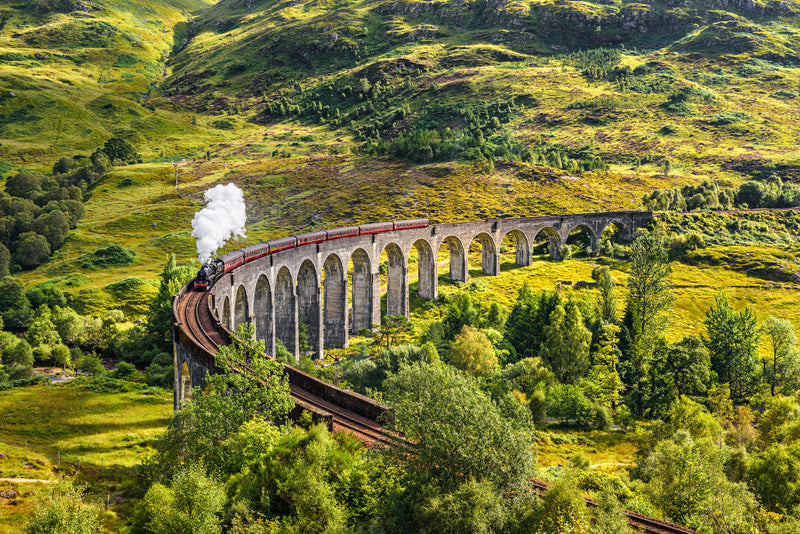
The 84-mile return journey passes some of Scotland's most celebrated scenery, including Ben Nevis, Loch Shiel and the famous Glenfinnan Viaduct. The route also serves Arisaig, Britain's most westerly mainland railway station, before reaching the fishing port of Mallaig on the west coast.
First launched as a steam excursion in 1984, The Jacobite has been operated by West Coast Railways since 1995 and has become one of the UK's most popular rail tourism attractions. International recognition was further boosted by appearances in the Harry Potter films, where the train and Glenfinnan Viaduct featured as part of the Hogwarts Express route.
With tickets now on sale and services operating daily throughout the summer, the return of The Jacobite will be welcomed by both railway enthusiasts and visitors to the Scottish Highlands.
Image: Glenfinnan Railway Viaduct in Scotland with the Jacobite steam train passing over. ID 64118438 © Miroslav Liska. Dreamstime.com
ICE reaches the Belgian coast with new Oostende service
Passengers can now travel directly from Köln to the Belgian seaside thanks to a new seasonal ICE service launched by Deutsche Bahn and SNCB.
The first train departed on June 6, marking the start of a summer-only connection linking Köln, Aachen, Brussels, Gent-Sint-Pieters, Brugge and Oostende. The service is operated by Deutsche Bahn's newest generation ICE 3neo trains and provides a direct rail link from Germany to Belgium's North Sea coast.
To celebrate the launch, Deutsche Bahn officially named an ICE 3neo trainset "Köln" during a ceremony at Köln Hbf. The train was christened using water from the River Rhine before departing on its inaugural journey to Oostende.
The new service reflects growing demand for international rail travel between Germany and Belgium. Deutsche Bahn says passenger numbers on cross-border ICE services between the two countries increased by around 18 per cent between 2019 and 2025.
The seasonal train departs Köln Hbf at 10:08 on Saturdays and Sundays, reaching Oostende at 13:47. The return journey leaves Oostende at 14:24, arriving back in Köln at 17:50.
Intermediate stops include Aachen, Liège-Guillemins, Leuven, Brussels-North, Brussels-Midi, Gent-Sint-Pieters and Brugge, providing convenient access to destinations across Belgium.
The Oostende train becomes the ninth daily ICE train pair operating between Germany and Belgium. It will run on weekends from June 6 to June 27 and again from August 8 to August 30, giving travellers a direct rail option to the Belgian coast during the peak holiday season.
The launch forms part of a broader expansion of rail links between the two countries. Deutsche Bahn has also confirmed that a new direct Köln–Antwerpen service via Brussels Airport will begin operating on September 7, with two daily train pairs.
As international rail travel continues to grow across Europe, the new Oostende service offers another example of railways responding to demand for convenient cross-border leisure travel.
ZSSK Reveals First Refurbished Sleeper Car as Night Train Modernisation Begins
Slovakia's national rail operator, ZSSK, has unveiled the first vehicle in its programme to modernise the country's overnight train fleet, presenting a refurbished sleeper car at the Rail Business Days 2026 exhibition in Ostrava.
The carriage is the first of an initial fleet of ten modernised sleeper vehicles planned by the operator, with the possibility of further vehicles being added in the future. The project forms part of ZSSK's efforts to improve comfort and secure the long-term future of overnight rail travel in Slovakia.
According to ZSSK, the refurbished vehicles will offer a significantly higher standard than the ageing fleet they are intended to replace. Features include full air-conditioning, power sockets and USB charging points at every berth, a modern passenger information system and redesigned accommodation layouts offering greater privacy.
The operator is also introducing new accommodation categories not previously available on its domestic night services. These will include premium apartments equipped with private shower and toilet facilities, alongside traditional sleeper compartments.
ZSSK currently operates 30 sleeping cars, most dating from the 1980s. Many are approaching the end of their working lives and some lack modern amenities such as air-conditioning. The operator plans to replace around 20 of its oldest vehicles as newer stock enters service.
The refurbishment programme is being carried out by ŽOS Vrútky and includes long-term maintenance support for the vehicles.
The first refurbished sleeper cars are expected to enter service later in 2026. They are planned for deployment on overnight services linking Humenné with Praha via Košice and Žilina, as well as trains between Humenné and Bratislava.
The unveiling took place alongside representatives from ZSSK, České dráhy and ŽOS Vrútky, underlining the importance of overnight rail links between Slovakia and the Czech Republic.
As overnight rail experiences a wider European resurgence, ZSSK hopes the upgraded vehicles will help ensure night trains remain an attractive option for both domestic and international travellers.
Northern Launches £35 Unlimited Travel Ticket Across Entire Network
Northern has launched a new unlimited travel ticket designed to encourage passengers to explore more of its network for a fixed daily price.
The new Northern Explorer ticket offers unlimited hop-on, hop-off travel on all Northern services for £35 per day, allowing passengers to make multiple journeys across the operator's extensive network without purchasing separate tickets.
The ticket is valid at any time of day, including weekdays, weekends, peak periods and off-peak services, giving travellers considerable flexibility when planning their journeys. Northern says the product is aimed at making day trips easier and more affordable, whether passengers are visiting cities, tourist attractions or countryside destinations across northern England.
Promoting the new ticket, the operator highlighted the breadth of destinations accessible on its network, ranging from major urban centres and historic landmarks to areas of outstanding natural beauty. Northern has also published a series of suggested itineraries to help customers make the most of the ticket, demonstrating how several destinations can be visited in a single day.
Unlike traditional point-to-point tickets, the Northern Explorer is designed specifically for leisure travel, allowing passengers to break their journeys as often as they wish and travel spontaneously without needing to plan every leg in advance. The operator says this removes the need to buy multiple tickets and offers a simple flat-rate fare regardless of the number of journeys made.
Northern operates services to more than 500 stations across northern England, connecting major cities including Liverpool, Manchester, Leeds, Sheffield, Newcastle upon Tyne and York. The company hopes the new ticket will encourage both residents and visitors to discover more destinations by rail while benefiting from unlimited travel for a single daily fare.