DSB to Take Over Go Collective Train Services
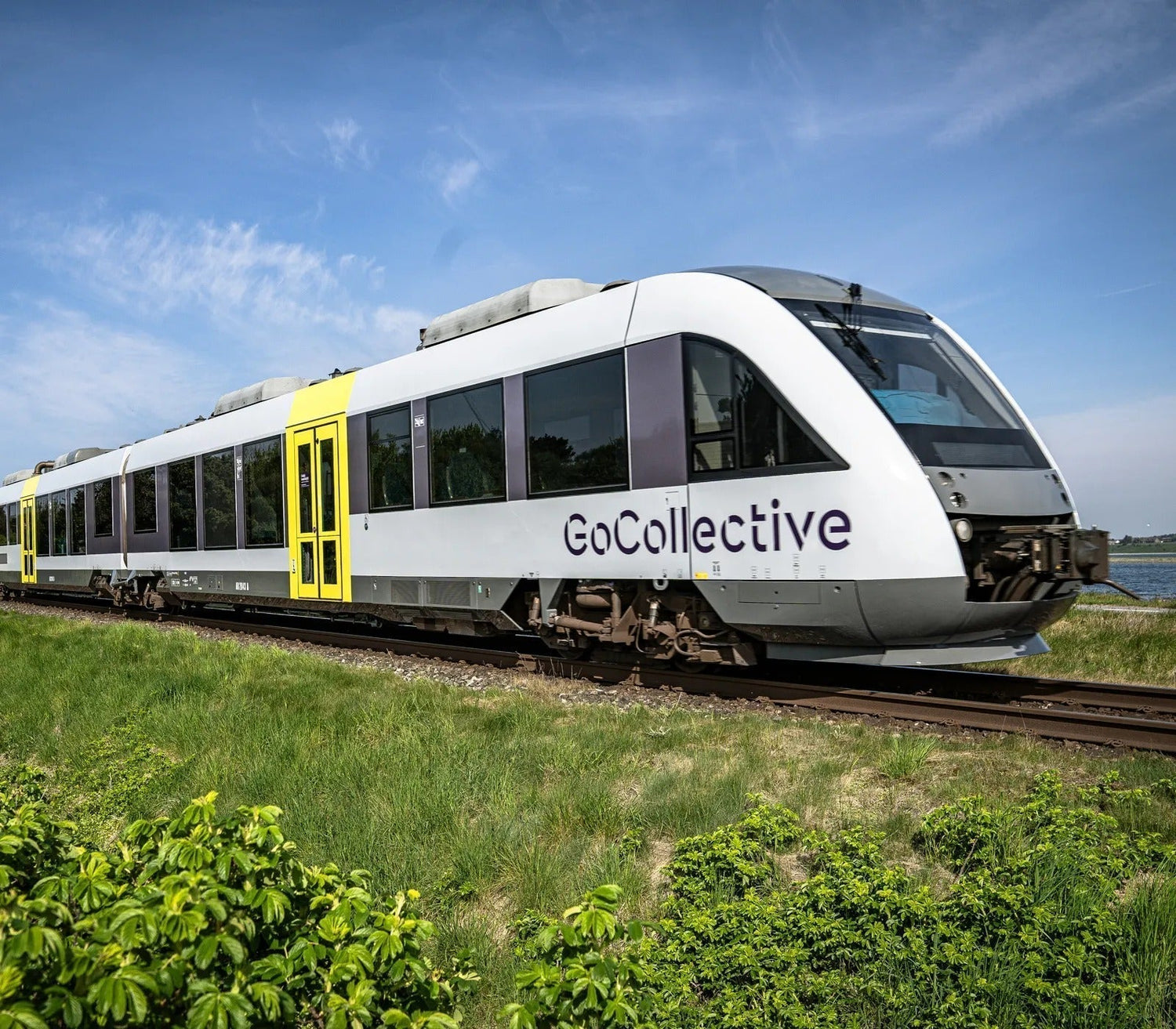
Danish national operator DSB will take over the passenger rail services currently operated by Go Collective from September 1, following an agreement between the Danish Ministry of Housing, Rural Affairs and Transport and the private operator.
The transfer will see DSB assume responsibility for train services in Central and West Jutland, as well as on the Svendborg Line, ensuring continuity of operations for passengers.
To support the transition, DSB will establish a dedicated subsidiary based at Go Collective's existing headquarters in Silkeborg. Services will continue to be operated using the current fleet of Go Collective trains.
As part of the agreement, DSB has already purchased nine trainsets, which will be prepared for service ahead of the transfer. The remaining 50 trainsets will pass to DSB when it formally takes over operations in September.
Employees of Go Collective's rail business will transfer to DSB under Denmark's business transfer regulations, allowing operational knowledge and experience to be retained.
DSB Chief Executive Flemming Jensen said the company was committed to maintaining services for passengers while welcoming the experienced workforce from Go Collective.
The takeover follows a supplementary agreement between the Danish government and Go Collective, ensuring that passenger rail services continue without interruption under DSB's management from the beginning of September.
Photo courtesy of Go Collective.
New Naples–Bari–Lecce Frecciarossa Starts July 1
Trenitalia will introduce a new direct Frecciarossa service linking Naples, Bari and Lecce from July 1, providing the first direct high-speed rail connection between the regional capitals of Campania and Puglia.
The new service will operate between Lecce and Napoli Centrale, calling at Brindisi, Bari Centrale, Barletta, Foggia, Benevento and Napoli Afragola. The inaugural departure from Lecce takes place on July 1, with the first northbound service leaving Naples the following morning.
The train is expected to complete the journey between Bari and Naples in around three and a half hours, while the full journey between Lecce and Naples will take approximately five hours. Journey times have been reduced following the opening of the new Naples–Cancello section of the future Naples–Bari high-speed railway.
According to reports in the Italian railway press, the service will initially be operated by Trenitalia's ETR.600 tilting electric multiple units. Their active tilting technology allows higher speeds over the curving Caserta–Foggia route than conventional high-speed trains, making them well suited to the new service until further infrastructure improvements are completed.
The new train represents the first stage in improving rail links between Campania and Puglia while work continues on the Naples–Bari high-speed/high-capacity line. Once the project is complete, journey times between the two cities are expected to fall further.
The introduction of the service also strengthens links between Salento and the wider Italian high-speed network, providing easier access to onward Frecciarossa services from Naples to Rome, Florence, Bologna, Milan and Turin.
Charing Cross and Waterloo East to Close for 22-Day Engineering Programme
Passengers using Southeastern services in London are being advised to plan ahead this summer as London Charing Cross and Waterloo East stations close for a major programme of engineering work.
From July 26 until August 16, no Southeastern trains will serve either station while Network Rail carries out a £20 million programme of track, platform and structural renewals designed to improve the long-term safety and reliability of the railway.
The 22-day closure will see almost two kilometres of 36-year-old track replaced, sections of platforms at Charing Cross rebuilt, drainage systems upgraded and structural repairs carried out to the pedestrian bridge linking Waterloo East with London Waterloo, as well as to the adjacent Hungerford Bridge.
Rather than carrying out the work over numerous weekends, the railway has opted for a single extended closure to reduce overall disruption and complete the project more efficiently.
During the closure, services that would normally terminate at Charing Cross will instead be diverted to London Victoria, London Cannon Street, London Blackfriars or London Bridge. Timetables across much of the Southeastern network will be revised, with some routes operating less frequently and first and last train times changing.
Passengers are advised to check their journey before travelling, particularly when making evening journeys, as the last train of the day may depart earlier than usual.
Additional weekend closures affecting Charing Cross and Waterloo East are also planned on July 18–19, August 22–23 and October 10–11 to facilitate preparatory and follow-up work. Service patterns on these weekends will differ from those during the main closure.
To help passengers complete their journeys, Southeastern tickets will be accepted on a range of alternative services during the main closure, including London Underground, Thameslink and Southern trains between key central London stations.
High Speed services operated by Southeastern, together with Medway Valley Line and Sheerness branch services, will continue to operate as normal throughout the engineering programme.
Construction Begins on Major Zürich–Winterthur Rail Expansion
Construction has officially begun on one of Switzerland's largest railway infrastructure projects, with work now underway on the long-planned four-track expansion between Zürich and Winterthur.
The MehrSpur Zürich–Winterthur project is centred on the construction of the 9 km Brüttener Tunnel, which will remove one of the biggest bottlenecks on the Swiss rail network. Once complete, the scheme will increase capacity by around 30%, allowing up to 900 trains and more than 150,000 passengers to use the corridor each day.
The official groundbreaking ceremony took place in Bassersdorf on July 2, attended by Federal Councillor Albert Rösti, Zurich Cantonal Councillor Martin Neukom and SBB Chief Executive Vincent Ducrot.
In addition to the twin-bore Brüttener Tunnel, the project includes major upgrades to the stations at Wallisellen, Dietlikon, Bassersdorf and Winterthur Töss, together with improvements to the connecting railway infrastructure.
The project is expected to deliver benefits for local, national and international rail travel by increasing capacity for Zürich S-Bahn services, improving long-distance connections across Switzerland and creating additional paths for freight trains.
Construction is expected to continue for around ten years, with most rail services maintained throughout the works. However, some timetable changes affecting Zürich S-Bahn services will be introduced from the December 2026 timetable change, with further alterations as construction progresses.
The first elements of the project are expected to enter service from 2028, with the station improvements being commissioned in stages over the following years. The Brüttener Tunnel itself is scheduled to open in 2037.
Costing approximately CHF 3.3 billion, the project is being funded through Switzerland's Railway Infrastructure Fund. At the peak of construction, around 1,000 people will be working across the 30 km construction corridor, with SBB investing around CHF 1 million every day throughout the programme.
Once complete, the scheme will remove one of the country's busiest rail bottlenecks, providing additional capacity, improved reliability and shorter journey times on one of Switzerland's most important railway corridors.
The Summer 2026 edition of the European Rail Timetable is available NOW in print and digital formats and is the perfect partner to our Rail Map Europe.